🍂 Fall Harvest Sale • Build Your Own Fall Forest Bundle

🍁 Canada Grows Together

Give $10 Canadian. Get $10 Canadian.

Chaga Mushroom Identification: How to Identify True Birch Chaga in the Wild

This field guide focuses on how to identify chaga in the wild, not what chaga is.

When foraging, you will likely encounter tree burls, black knots, wounds, and other growths commonly mistaken for chaga. These look-alikes are often referred to as "fool's chaga" or false chaga.

Before harvesting, it’s essential to understand how to correctly identify true birch chaga in the wild.

Because chaga can be easily confused with burls, wounds, and other fungi, proper identification is essential for safety and responsible harvesting.

The Golden Rule of Chaga:


Only harvest from living white or yellow birch trees. Chaga found on other trees—such as poplar, aspen, or beech—is not considered true birch chaga and should not be harvested for use.

Use the checklist below to confirm you are looking at true birch chaga—not a burl, wound, or common look‑alike.

Quick Identification Checklist

Host tree: Living white or yellow birch
Exterior: Black, cracked, charcoal-like surface
Interior: Rust-orange colour (not black)
Texture: Hard sterile conk, not smooth wood
Growth pattern: Protrudes from the trunk, not a rounded burl

King Chaga teaching chaga identification beside a birch tree with authentic chaga while a Mushroom Kingdom jester displays a birch burl mistaken for chaga beneath the Forest Wisdom yin yang symbol.

Fool's Chaga vs. True Chaga: How to Tell the Difference

While King Chaga watches over the northern birch forests in our story, real-world chaga identification requires careful observation. Not everything growing on a birch tree is chaga. Learning to distinguish true chaga from common lookalikes, often referred to as "fool's chaga" or false chaga, is an important step for anyone interested in wild mushroom identification. Understanding these differences helps promote responsible harvesting and a deeper appreciation of the forest ecosystem.

Learn More About Chaga

New to chaga? Explore the guides below to learn about identification, traditional use, preparation methods, safety considerations, and responsible harvesting.

  • What Is Chaga?
    Learn what chaga is, where it grows, and how it has traditionally been prepared.
  • Chaga Benefits
    Explore traditional uses, scientific interest, and why people continue to explore chaga today.
  • How to Use Chaga
    Learn about tea, powder, tincture, and other common preparation methods.
  • How to Make Chaga Tea
    Step-by-step brewing methods and traditional preparation techniques.
  • Chaga Side Effects & Safety
    Review sourcing, identification, oxalates, and responsible use considerations.
  • Ethical Chaga Harvesting Guide
    Learn about sustainable harvesting practices and forest stewardship.
  • Wild vs Cultivated Chaga
    Understand the differences between wild-harvested and cultivated chaga, including sourcing methods, growing environments, and traditional harvesting practices.

  • Is Chaga a Mushroom?
    Chaga is one of the most misunderstood forest fungi. Read our guide to Common Chaga Myths & Misconceptions.

⚠️ Warning: Never harvest “dead chaga” from fallen or dead trees.

Dead chaga often appears black inside and out and may be contaminated.


Common “Fool’s Chaga” Look‑Alikes to Avoid

Before harvesting, make sure you are not looking at one of these common forest look‑alikes:

  • Tree burls – Smooth, woody growths that are part of the tree itself
  • Corky bark disease – Rough, dark bark that can mimic chaga’s texture
  • Cherry tree wounds – Dark, oozing sap or scar tissue that looks charred
  • Oak or poplar fungi – Similar in appearance but not true birch chaga

Chaga vs Black Knot (How to Tell the Difference)

  • chaga = charcoal black, cracked, grows on birch
  • black knot = smooth black swelling, grows on cherry/plum

If you’re unsure, leave it be.

For peace of mind, many people choose verified wild chaga harvested from living birch and prepared according to documented sourcing and safety standards.

For traditionally prepared chaga tea:Wild Canadian Chaga Tea


What Trees Does Chaga Grow On?

Chaga Host Trees — Quick Identification Guide

Tree Type Does Chaga Grow Here? What to Know
White Birch (Betula papyrifera) Yes — Ideal host Traditional and most valued host. Produces true birch chaga with a black outer crust and rust‑coloured interior.
Yellow Birch ✅ Yes Acceptable birch species, though less common than white birch.
Aspen / Poplar ⚠️ Sometimes May host Inonotus obliquus, but lacks birch‑derived compounds. Not considered true birch chaga.
Beech ⚠️ Rare Often confused with chaga but typically a different growth or fungus.
Oak ❌ No Growths are almost always burls or other fungi — not chaga.
Dead or Fallen Trees ❌ Never harvest “Dead chaga” appears black inside and out and may be contaminated.

Chaga is a white‑rot fungus that infects the heartwood of living trees. Because it can resemble many other forest growths, correct host tree identification is essential.


Why Does Chaga Grow on Birch Trees?

Chaga is most commonly associated with living birch trees, particularly white birch and yellow birch. In traditional harvesting, these species are considered the preferred hosts for true birch chaga. Because many look-alikes occur on other trees, correctly identifying the host tree is one of the most important steps in chaga identification.


Does Chaga Grow on Poplar or Aspen Trees?

Yes, Inonotus obliquus can appear on aspen and poplar, but this is not traditional birch chaga.

Chaga growing on non‑birch trees does not reflect the traditional birch‑host profile historically associated with true chaga.

For this reason, traditional harvesting standards focus exclusively on living white or yellow birch trees.


Chaga vs. Burl — How to Tell the Difference

Below are common examples of “fool’s chaga” often mistaken for true birch chaga:

Fool's chaga on oak tree — not true chaga
Fool’s chaga on oak tree
Corky bark disease — chaga look-alike
Corky bark disease (not chaga)
Tree burl mistaken for chaga
Tree burl often mistaken for chaga
Poplar burl not chaga mushroom
False chaga on poplar
Cherry tree wound mistaken for chaga
Cherry tree wound and scar tissue
Tree disease growth mistaken for chaga
Tree disease growth — fool’s chaga

As you can see, chaga identification is not always easy. Many forest growths can resemble chaga at first glance.


After Identifying Chaga Safely

Correct identification is essential, but wild foraging is not suitable for everyone.

For tea or wellness use, many people choose lab‑verified wild chaga harvested from living birch, with documented origin and preparation standards.

For traditionally prepared chaga tea:
Wild Canadian Chaga Tea


What Does Chaga Look Like?

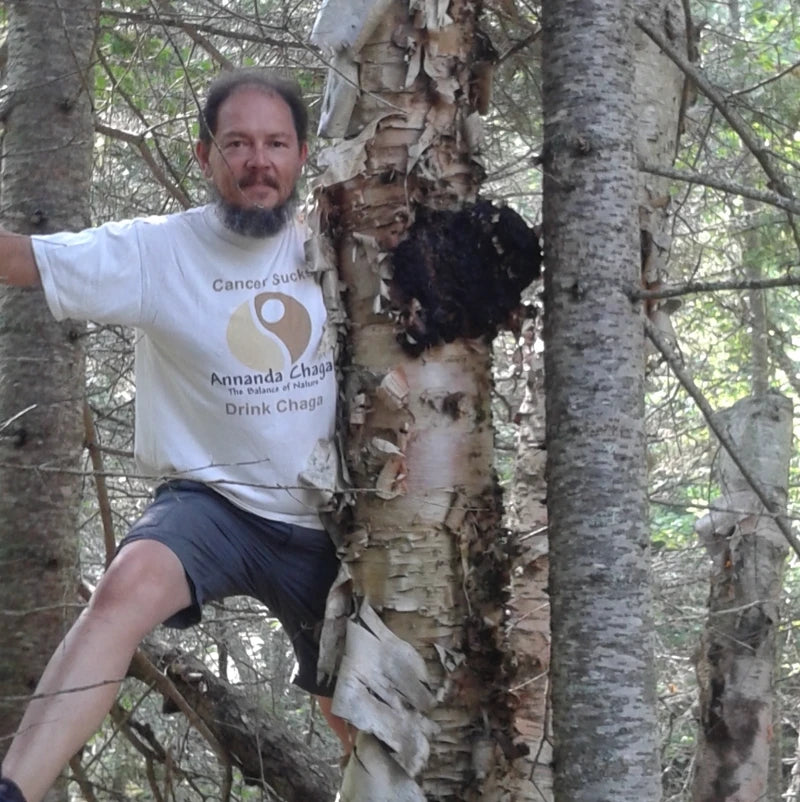
True birch chaga typically appears as a black, charcoal-like growth protruding from the trunk of a living birch tree. Its outer surface is rough and cracked, while the interior reveals a distinctive rust-orange colour. Unlike smooth tree burls or scar tissue, chaga has a deeply fissured appearance and a hard, sterile conk structure.

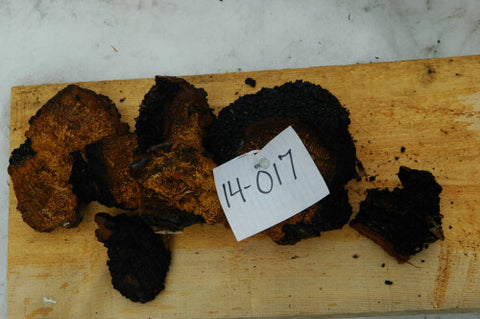
True birch chaga on living white birch — cracked black exterior
True birch chaga on a living white birch tree
Verified chaga mushroom harvested and tagged
Verified, harvested chaga
Young chaga forming on birch


Watch Chaga Being Wild-Harvested

This short video shows a real chaga conk being harvested from a living birch tree in the Canadian boreal forest.

Seeing chaga in its natural environment can make it easier to recognize true birch chaga, understand where it grows, and appreciate the importance of responsible harvesting practices in Northern Ontario.

Annanda Organic Chaga Mushrooms

Chaga Fruiting Body: Identification and Lifecycle (Rare Stage)

The chaga fruiting body is the rare reproductive stage of Inonotus obliquus and plays a role in chaga identification, although it is rarely seen in the wild.

Because of its rarity, the fruiting body is not typically used for identification, but understanding this stage helps distinguish true chaga from other fungal growths and tree abnormalities.

This stage is sometimes referenced in advanced field guides as part of chaga fruiting body identification, although it is rarely observed in intact form.

Unlike the black outer conk commonly harvested from birch trees, the fruiting body forms later in the lifecycle and only under specific conditions—usually as the host tree declines.

This video footage provides a rare example of the chaga fruiting body shortly after formation, before it is broken down by the natural forest processes.

For a broader explanation of how fruiting bodies differ across mushroom species, including how they compare to full-spectrum materials, see our guide on full-spectrum vs fruiting body mushrooms.

Chaga Mushroom Identification - FAQ

Find answers to common questions below

True chaga appears as a hard, irregular, charcoal‑black growth protruding from the trunk of a living white or yellow birch tree. The exterior is cracked and burnt‑looking, while the interior is rusty orange or amber, not black. Chaga is a sterile conk, not a mushroom cap, and grows directly from the tree’s heartwood.

Chaga and tree burls are often confused, but they differ in key ways. Tree burls are smooth, woody growths that are part of the tree itself and show normal wood grain inside. True chaga has a black, charcoal‑like exterior and a bright orange interior. If the growth is smooth and woody inside, it is not chaga.

"Fool's chaga" is a term commonly used for tree burls, wounds, black knots, and other growths that resemble chaga at first glance. Unlike true birch chaga, these look-alikes typically lack the characteristic rust-orange interior and are often found on non-birch trees. Careful identification of both the host tree and the chaga itself is essential before harvesting.

Chaga can grow on several tree species, but only chaga growing on living white or yellow birch trees is traditionally valued. Chaga found on poplar, aspen, beech, or oak lacks the birch‑derived compounds and is not considered traditional birch chaga.

Yes, chaga can grow on poplar, aspen, and other tree species. However, chaga growing on non‑birch hosts does not contain the same birch‑derived compounds and does not offer the traditional birch‑host profile. For safety and tradition, chaga should only be harvested from living birch trees.

“Dead chaga” refers to chaga found on fallen or dead trees. It often appears black both inside and out and may be contaminated with molds or mycotoxins. Dead chaga should never be harvested or consumed. Only chaga growing on living birch trees should be considered.

Yes. Chaga identification can be challenging because many natural tree growths resemble it. Proper identification requires checking the host tree, exterior texture, interior color, and growth pattern. When in doubt, it is best to leave the growth untouched and avoid ingestion.

Several forest growths are commonly mistaken for chaga, including tree burls, black knot disease, corky bark disease, wound tissue, and fungi growing on oak, poplar, or beech trees. Unlike true birch chaga, these look-alikes typically lack the characteristic charcoal-black exterior and rust-orange interior. Always confirm the host tree and examine the interior before harvesting.

Chaga and black knot can appear similar from a distance, but they grow on different trees and have different textures. True chaga grows on living birch trees and has a cracked, charcoal-like surface with a rust-orange interior. Black knot is a fungal disease most commonly found on cherry and plum trees, where it forms smooth or swollen black growths along branches. If the growth is on a cherry or plum tree, it is not chaga.

To identify chaga in the wild, start by confirming that it is growing on a living white or yellow birch tree. Look for a hard, black, cracked exterior that resembles burnt charcoal. If harvested, the interior should be rust-orange or amber in colour. True chaga protrudes from the trunk as a sterile conk and is not smooth like a tree burl. Correct identification requires examining the host tree, exterior appearance, interior colour, and growth pattern together.

Important: This information is for education and safety awareness only and is not medical advice. Do not use this content to diagnose, treat, or self-manage a health condition. If you are considering consuming any natural health product, consult a qualified healthcare professional.

Updated: August 2026

Written from our wild-harvesting experience in Northern Ontario since 2012.