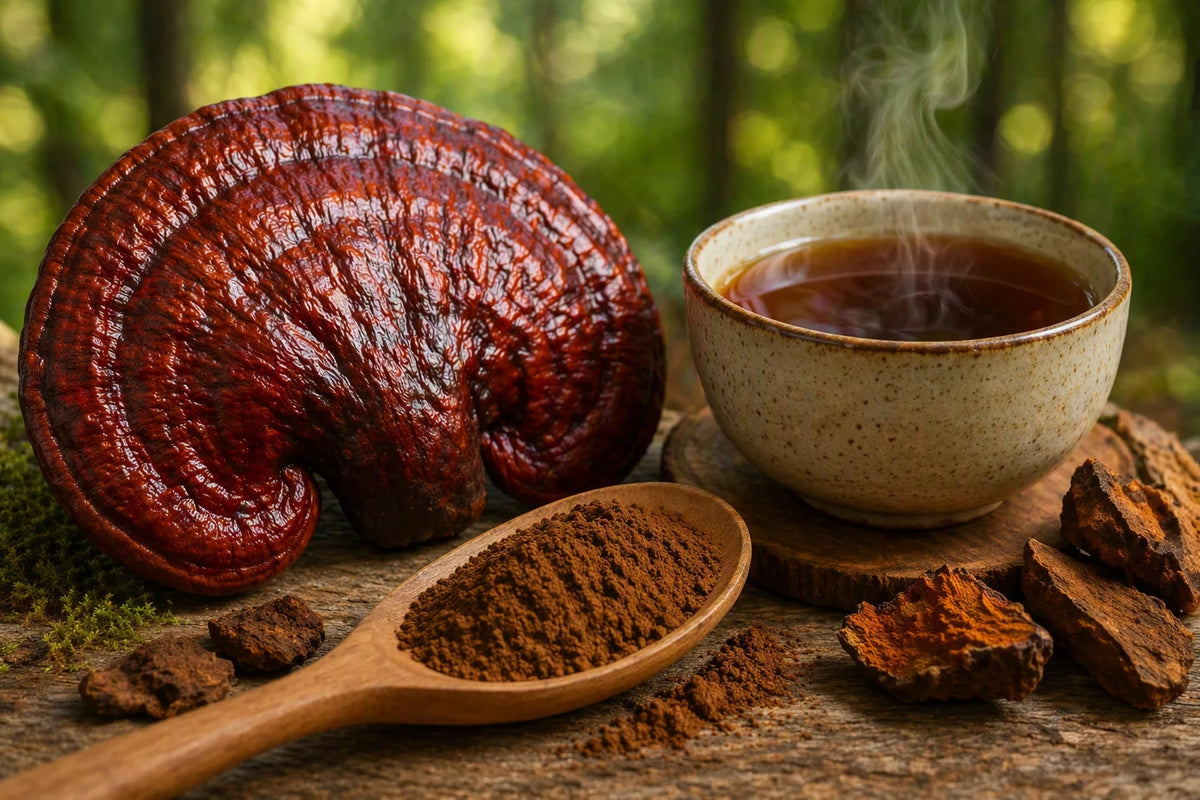
Reishi mushroom (Ganoderma lucidum) is a wood-growing fungus found on hardwood trees in forested regions around the world. Recognized by its glossy reddish-brown appearance and shelf-like growth pattern, reishi has been traditionally prepared as a slow-brewed decoction and used as part of long-standing cultural practices.
Unlike culinary mushrooms, reishi is not typically eaten as food. Instead, it is commonly prepared as a tea, powder, or extract using extended, low-temperature methods designed to draw out naturally occurring compounds.
Today, reishi remains one of the most widely recognized functional mushrooms and is frequently explored in discussions about traditional mushroom preparation, sourcing, use, and reishi mushroom benefits.
What Is Reishi Mushroom?
Reishi (Ganoderma lucidum) is a bracket fungus that grows on hardwood trees and decaying wood in temperate forest ecosystems.
It is sometimes referred to as:
- Reishi mushroom
- Lingzhi mushroom
- Ganoderma lucidum
Unlike mushrooms commonly prepared as food, reishi develops a tough woody structure and is traditionally prepared through extraction methods rather than consumed directly.
Is Reishi the Same as Lingzhi?
Yes. Reishi and Lingzhi are commonly used names for Ganoderma lucidum and closely related Ganoderma species.
The name Lingzhi is more commonly used in China, while Reishi is more commonly used in Japan and many English-speaking countries.
Although the names differ, both generally refer to the same group of wood-growing mushrooms recognized for their distinctive glossy appearance and long history of traditional use.
What Does Reishi Mushroom Look Like?
Reishi is often recognized by several distinctive characteristics:
- Glossy reddish-brown surface
- Fan-shaped or kidney-shaped cap
- Hard woody texture
- White growing edge when actively growing
- Shelf-like growth on wood
The appearance of reishi can vary depending on growing conditions, age, and species variation, but its varnished surface is often one of its most recognizable features.
Where Does Reishi Grow?
Reishi grows naturally on hardwood trees and decaying logs throughout:
- North America
- Europe
- Asia
It is commonly found on:
- Maple
- Oak
- Beech
- Other hardwood species
Today, many reishi products are produced using controlled cultivation methods that provide consistency, traceability, and reliable sourcing.
Is Reishi Mushroom Edible?
Reishi is technically edible, but it is rarely consumed as a conventional food because of its tough texture and naturally bitter taste.
Instead, reishi is traditionally prepared as:
- Tea
- Powder
- Tincture
These preparations make it easier to incorporate reishi into daily routines.
What Is Reishi Used For?
Historically, reishi has been prepared and consumed as part of long-standing traditional practices rather than for immediate effects.
Today, interest in reishi typically focuses on:
- Traditional preparation methods
- Mushroom tea and decoctions
- Powdered mushroom preparations
- Liquid tinctures and extracts
- Forest-based mushroom traditions
For a more detailed discussion, see our guide:
Why People Explore Reishi Today
People often explore reishi because of:
- Its long history of traditional use
- Traditional preparation as tea and extracts
- Interest in naturally occurring compounds
- Curiosity about reishi mushroom benefits
- Its place in modern mushroom products
Traditional Forms of Reishi
Reishi Tea
Reishi Powder
→ Learn More About Reishi Powder
Reishi Tincture
→ Learn More About Reishi Tincture
Is Reishi Safe?
Many people researching reishi also have questions about safety, preparation, and suitability.
For a detailed overview of safety considerations, responsible use, and commonly discussed side effects, see:
→ Reishi Side Effects & Safety