
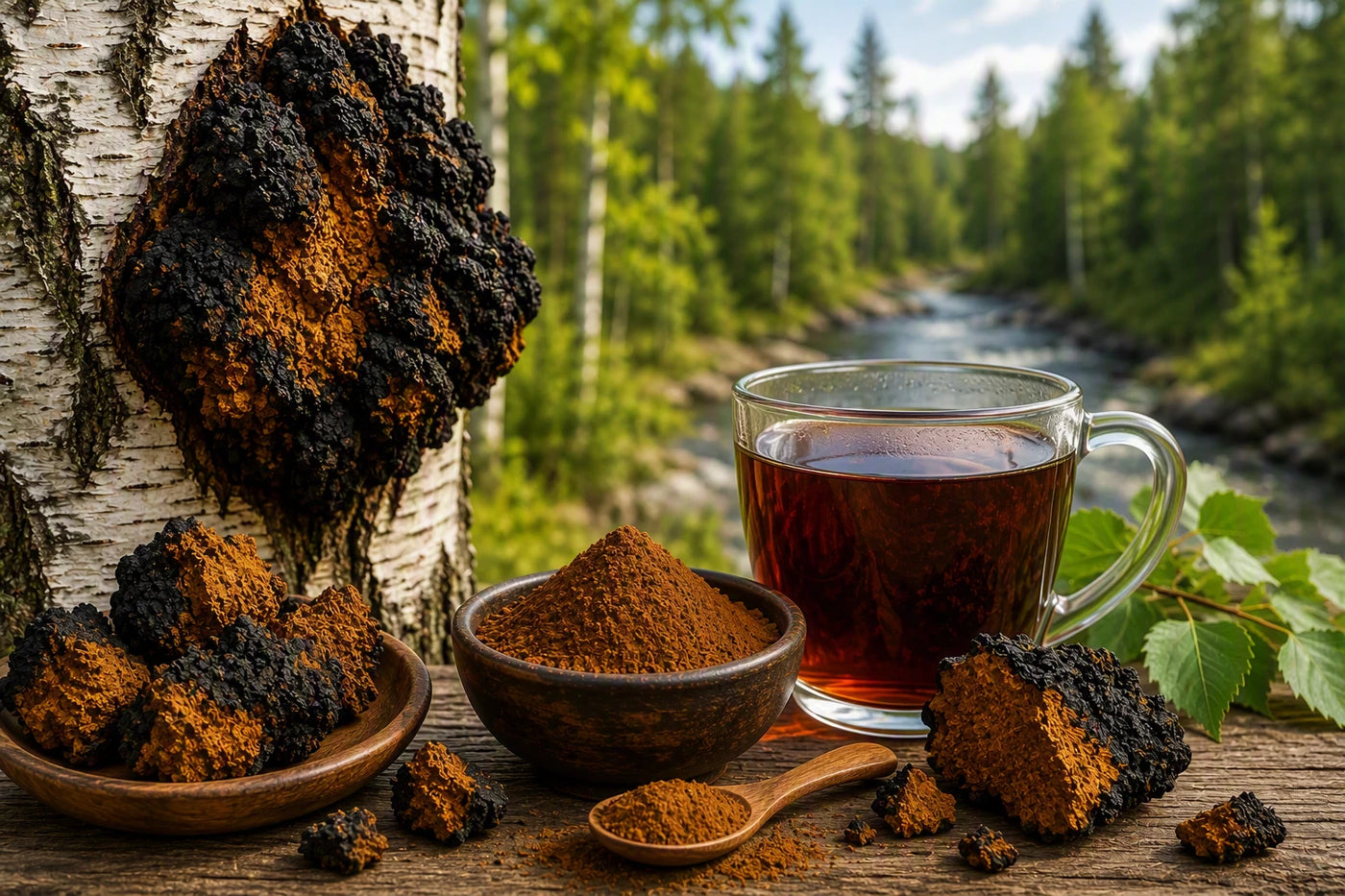
Understanding Traditional and Modern Uses of Chaga
Chaga mushroom (Inonotus obliquus) has been traditionally prepared as a tea, decoction, or chaga extract for generations and remains one of the most widely recognized wild-harvested fungi in North America.
When people search for chaga benefits, chaga mushroom benefits, what chaga is used for, what chaga is good for, or why people drink chaga tea, they are often looking to understand traditional preparation methods, naturally occurring compounds, and the reasons chaga continues to attract interest today.
Today, chaga is most commonly used as:
- A slow-brewed tea made from chaga chunks or powder
- A liquid extract or tincture
- A traditional forest-derived beverage
- An ingredient in mushroom blends and wellness products
While modern interest in chaga continues to grow, understanding its traditional use, naturally occurring compounds, and ongoing scientific interest provides important context.
What Are the Benefits of Chaga?
When people search for chaga benefits, they are often looking for information about traditional use, naturally occurring compounds found in chaga, and ongoing scientific interest in this unique birch-growing fungus.
Chaga continues to attract attention because of:
- Its long history of traditional use as a tea
- Its naturally occurring compounds, including polysaccharides, beta glucans, melanin, polyphenols, and triterpenes
- Its role as a naturally caffeine-free beverage
- Ongoing scientific research involving fungi and forest-derived organisms
- Its connection to traditional northern forest cultures
Chaga grows primarily on living birch trees and is most commonly found in northern forests and cold climates where it develops slowly over many years.
Understanding these areas of interest helps provide context for why chaga remains one of the most widely discussed wild-harvested fungi today.
Why Is Chaga So Popular?
Chaga remains one of the most widely discussed mushrooms because of its long history of traditional use, its naturally occurring compounds, its connection to birch forests, and the growing scientific interest surrounding fungi and forest-derived organisms.
Many people first discover chaga through chaga tea, while others are introduced to chaga through tinctures, powders, extracts, or educational resources about traditional northern forest practices.
What Is Chaga Used For?
Historically, chaga was most commonly prepared as a slow-brewed tea made from wild-harvested material growing on living birch trees. Today, chaga is available in a variety of forms, including tea, powder, extracts, tinctures, and other mushroom products.
When people ask what chaga is used for, they are often interested in:
- Traditional chaga tea preparation
- Chaga powder and extracts
- Chaga tinctures
- Daily mushroom routines
- Naturally occurring compounds found in chaga
- Traditional use in northern forest cultures
Modern interest in chaga continues to be shaped by its long history of traditional use, its connection to birch forests, and ongoing scientific interest in this unique wild-harvested fungus.
For a broader introduction, see:
Commonly Discussed Chaga Benefits
When people search for chaga benefits, they are often interested in topics that appear in traditional use discussions and scientific literature surrounding chaga.
Common areas of interest include:
- Chaga tea and daily wellness routines
- Naturally occurring compounds found in chaga
- Traditional use in northern cultures
- Research involving polysaccharides, melanin, and triterpenes
- The role of chaga in modern mushroom products
Because terminology and interpretations vary, these discussions should be understood in the context of both traditional use and ongoing research rather than as established medical outcomes.
For a broader introduction to chaga itself, including where it grows, how it forms, and why it is often called the King of Mushrooms, see our guide to What Is Chaga Mushroom.
10 Reasons People Explore Chaga Today
1. Its Long History of Traditional Use
Chaga has been prepared as a tea in northern regions for generations and remains one of the most widely recognized forest fungi.
2. Its Connection to Birch Forests
Chaga grows primarily on living birch trees in cold climates, where it develops slowly over many years before being harvested and prepared as tea, tinctures, or chaga extract.
3. Its Traditional Tea Preparation
Many people are introduced to chaga through slow-brewed chaga tea.
4. Naturally Occurring Compounds Found in Chaga
Researchers have explored naturally occurring compounds found in chaga, including polysaccharides, beta glucans, melanin, polyphenols, and triterpenes.
These compounds are frequently discussed in both traditional use and modern research contexts. For a deeper look at the nutritional compounds found in chaga mushroom, including naturally occurring vitamins, minerals, and other constituents, see our guide below.
→ Nutritional Compounds Found in Chaga Mushroom
5. Growing Scientific Interest
Chaga has become the subject of increasing scientific and academic research. Much of this research remains exploratory and contributes to ongoing discussions surrounding traditional use and naturally occurring fungal compounds.
6. A Naturally Caffeine-Free Beverage
Many people enjoy chaga tea as an alternative to caffeinated drinks. When people search for the benefits of chaga tea, they are often interested in its traditional use as a slow-brewed beverage, its naturally caffeine-free nature, and its long history of preparation in northern birch forest regions.
7. Its Place in Modern Mushroom Products
Chaga is commonly available as tea, powder, extracts, and tinctures.
8. Sustainable Wild Harvesting Practices
Interest in ethically harvested forest products has grown significantly.
9. Traditional and Modern Preparation Methods
People continue to explore different ways of preparing chaga.
10. Interest In Wild-Harvested Chaga
Many people are drawn to wild-harvested chaga because of its connection to northern birch forests, traditional harvesting practices, and its long history of preparation as chaga tea, powders, and extracts.
How Is Chaga Traditionally Used?
Traditionally, chaga was prepared as a slow-brewed decoction rather than a quick infusion.
In northern regions where birch forests are abundant, harvested chaga was typically simmered for long periods to create a dark tea that could be enjoyed daily.
Unlike many modern supplements, traditional chaga use emphasized:
- Consistency over time
- Slow preparation methods
- Seasonal harvesting practices
- Connection to local forest ecosystems
Chaga was not traditionally viewed as a quick solution or short-term product but rather as part of a regular daily routine.
Common Ways People Use Chaga Today

Chaga Tea
Chaga tea remains the most traditional and widely used preparation method.
Tea can be brewed from:
- Chaga chunks
- Chaga powder
- Ready-to-brew tea products
Explore:
Chaga Powder
Some people prefer powdered chaga because it is easy to measure and prepare.
Chaga powder can be:
- Brewed as tea
- Added to beverages
- Used in recipes
Explore:
Chaga Tinctures and Extracts
Liquid extracts and tinctures provide an alternative preparation format.
These concentrated preparations are typically used in very small amounts.
Explore:
Chaga and Skin Care
Historically, chaga has also appeared in discussions related to topical and cosmetic applications.
Explore:
Why Do People Search for "Chaga Benefits"?
The phrase "chaga benefits" is one of the most common chaga-related searches online.
Many people searching for how chaga is commonly used are looking for information about traditional preparation methods, historical use, and how chaga is incorporated into daily routines.
In many cases, people are not looking for a single benefit. Instead, they are trying to understand:
- Why chaga has attracted attention
- How it has been traditionally used
- Why it continues to be studied today
- How it fits into modern wellness routines
The word "benefits" can mean different things to different people, which is why it is useful to look at chaga through the lens of traditional use, preparation, and ongoing scientific interest rather than simplified claims.
Why Is Chaga Studied?
Researchers have explored chaga because it contains a variety of naturally occurring compounds, including beta glucans, polysaccharides, melanin, polyphenols, and triterpenes.
These compounds are frequently discussed in scientific literature involving fungi and forest-derived organisms. Research into chaga continues to evolve, and much of the published work remains exploratory or pre-clinical in nature.
Current scientific interest should not be interpreted as confirmation of specific health outcomes.
For a closer look at the naturally occurring compounds found in chaga, see our guide:
→ Nutritional Compounds Found in Chaga Mushroom
What Is Chaga Good For Traditionally?
Historically, chaga was valued primarily as a traditional tea prepared from wild-harvested material growing on birch trees.
Traditional use focused on:
- Daily preparation as a beverage
- Long-term consumption habits
- Seasonal harvesting practices
- Use within northern forest cultures
For more information see our guide: What Is Chaga Mushroom?
Learn More About Chaga
If you're exploring chaga for the first time, these guides provide additional context:
- What Is Chaga Mushroom?
- How to Use Chaga
- Chaga Identification Guide
- Chaga Side Effects & Safety
- Wild vs Cultivated Chaga
- How to Make Chaga Tea
- Does Chaga Tea Have Caffeine?
- How to Brew Chaga Powder
- How to Brew Chaga Chunks
- How Long Does Chaga Tea Last?
Explore the Mushroom Kingdom
Start Here → Map of the Mushroom Kingdom

