

⚠️ Warning: Never harvest “dead chaga” from fallen or dead trees.
Dead chaga often appears black inside and out and may be contaminated.
Common “Fool’s Chaga” Look‑Alikes to Avoid
Before harvesting, make sure you are not looking at one of these common forest look‑alikes:
- Tree burls – Smooth, woody growths that are part of the tree itself
- Corky bark disease – Rough, dark bark that can mimic chaga’s texture
- Cherry tree wounds – Dark, oozing sap or scar tissue that looks charred
- Oak or poplar fungi – Similar in appearance but not true birch chaga
Chaga vs Black Knot (How to Tell the Difference)
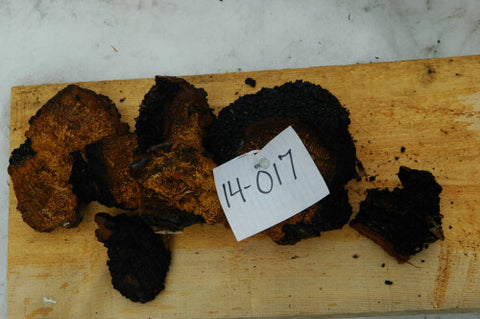
- chaga = charcoal black, cracked, grows on birch
- black knot = smooth black swelling, grows on cherry/plum
If you’re unsure, leave it be.
For peace of mind, many people choose verified wild chaga harvested from living birch and prepared according to documented sourcing and safety standards.
For traditionally prepared chaga tea:Wild Canadian Chaga Tea
What Trees Does Chaga Grow On?
Chaga Host Trees — Quick Identification Guide
| Tree Type | Does Chaga Grow Here? | What to Know |
|---|---|---|
| White Birch (Betula papyrifera) | ✅ Yes — Ideal host | Traditional and most valued host. Produces true birch chaga with a black outer crust and rust‑coloured interior. |
| Yellow Birch | ✅ Yes | Acceptable birch species, though less common than white birch. |
| Aspen / Poplar | ⚠️ Sometimes | May host Inonotus obliquus, but lacks birch‑derived compounds. Not considered true birch chaga. |
| Beech | ⚠️ Rare | Often confused with chaga but typically a different growth or fungus. |
| Oak | ❌ No | Growths are almost always burls or other fungi — not chaga. |
| Dead or Fallen Trees | ❌ Never harvest | “Dead chaga” appears black inside and out and may be contaminated. |
Chaga is a white‑rot fungus that infects the heartwood of living trees. Because it can resemble many other forest growths, correct host tree identification is essential.
Does Chaga Grow on Poplar or Aspen Trees?
Yes, Inonotus obliquus can appear on aspen and poplar, but this is not traditional birch chaga.
Chaga growing on non‑birch trees does not reflect the traditional birch‑host profile historically associated with true chaga.
For this reason, traditional harvesting standards focus exclusively on living white or yellow birch trees.
Chaga vs. Burl — How to Tell the Difference
Below are common examples of “fool’s chaga” often mistaken for true birch chaga:


As you can see, chaga identification is not always easy. Many forest growths can resemble chaga at first glance.
After Identifying Chaga Safely
Correct identification is essential, but wild foraging is not suitable for everyone.
For tea or wellness use, many people choose lab‑verified wild chaga harvested from living birch, with documented origin and preparation standards.
For traditionally prepared chaga tea:
Wild Canadian Chaga Tea
What Does Chaga Look Like?


Learn More
Learn more in our guide: What is Chaga? including sourcing, safety, and preparation tips.
Chaga Safety Considerations:
For a safety‑focused overview, including oxalates, sourcing, identification risks, and when extra caution may be appropriate, see Chaga Safe? Risks, Oxalates & Responsible Use
Brewing Guide:
Learn how to prepare chaga tea in our How to Make Chaga Tea: Complete Brewing Guide.
Wild vs Cultivated Mushrooms:
Understanding where chaga grows is part of a larger sourcing philosophy. Explore our wild vs cultivated guide to learn more.
How to Use Chaga:
After harvesting and drying, chaga can be prepared in several ways. Learn more in our how to use chaga guide.
