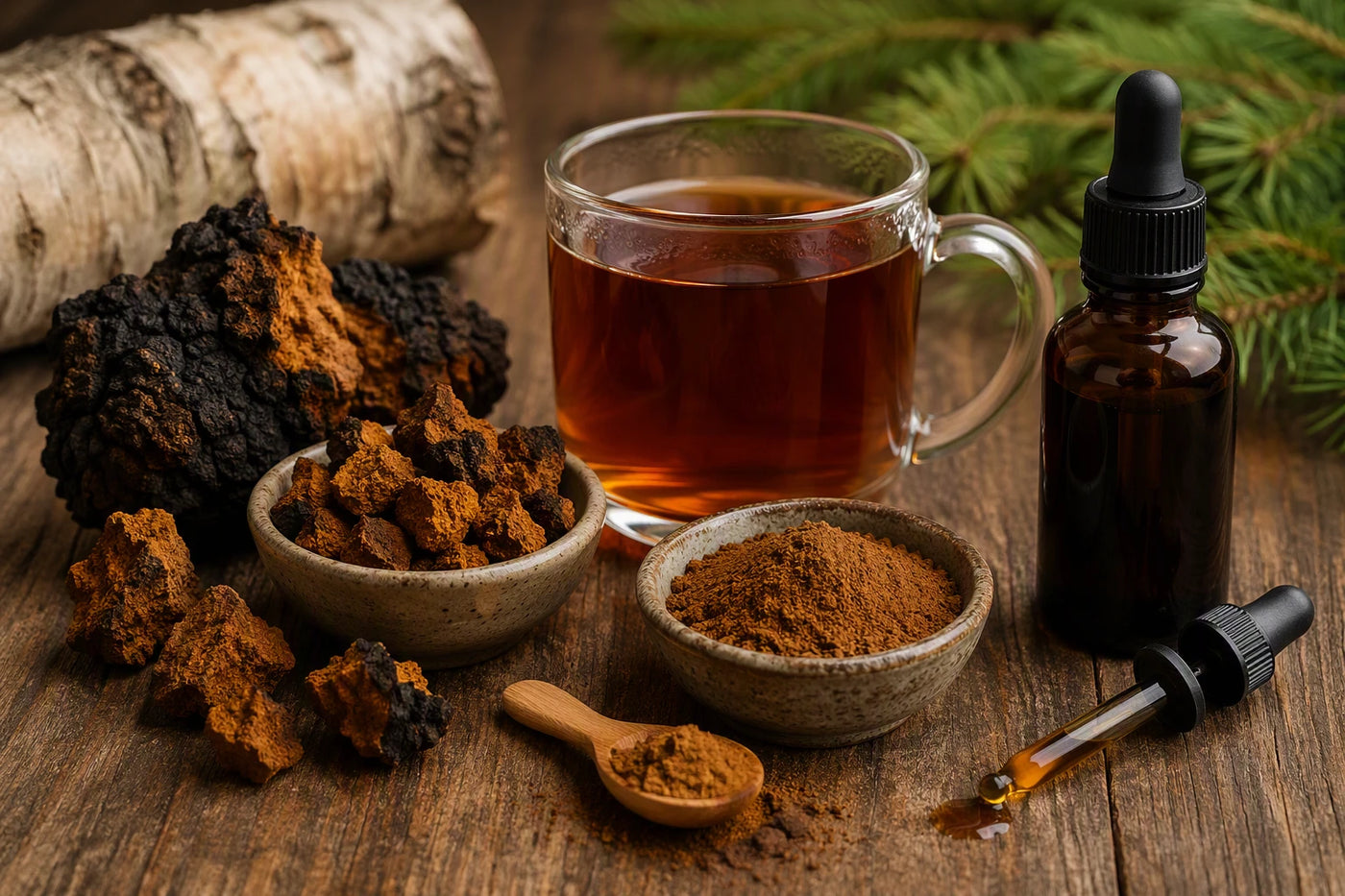
Before using chaga, it’s important to understand how it grows, and how it differs from many other fungi. See our chaga identification guide, ethical harvesting guide, and Chaga Myths & Misconceptions for a deeper understanding of chaga in its natural environment.
Quick Answer: Chaga is most commonly prepared as a tea using a slow, low-temperature brewing method. For a complete step-by-step guide, see how to make chaga tea. Chaga may also be used as a powder in beverages or taken as a liquid tincture, depending on the form and preparation style.
This guide explains how to use chaga in different forms, including tea, powder, and tinctures, as well as traditional and modern preparation methods.
If you are new to chaga, you can learn more in our guide what is chaga.
If you're exploring why people use chaga, see benefits of chaga.
Common Ways To Use Chaga
- Brew chaga as tea using chunks, tea-cut, or powder
- Mix chaga powder into beverages such as coffee or smoothies
- Take chaga as a tincture or liquid extract
- Add chaga powder to recipes such as soups or oatmeal
- Reuse chaga chunks for multiple brews
These methods reflect both traditional preparation practices and modern convenience options depending on available time and format.
Ways to Use Chaga
1. Brew Chaga as Tea
Chaga tea is the most traditional way to use chaga. It is prepared by gently heating chaga in water below boiling for an extended period, allowing a slow extraction into a dark, earthy beverage.
Learn how to prepare it step by step in our chaga tea guide.
2. Use Chaga Powder
Chaga powder is a convenient format that can be mixed into coffee, smoothies, or food. It offers flexibility for daily use without requiring long simmering times.
3. Take Chaga as a Tincture
Chaga tincture is prepared using water and alcohol-based methods. It is typically taken in small amounts and may be added to beverages.
4. Add Chaga to Food
Chaga powder may also be incorporated into recipes such as soups, oatmeal, or blended drinks. This approach allows chaga to be used alongside regular meals.
The way chaga is prepared depends on how it is sourced. Learn more about this in our wild vs cultivated sourcing guide.
Choosing the Right Way to Use Chaga
The best way to use chaga depends on the form available and the amount of preparation time preferred. Tea preparation reflects traditional use, while powder and tinctures offer convenience and flexibility.
Different forms of chaga lend themselves to different methods:
-
Chunks or tea-cut: Best for long, low-temperature brewing
→Chaga chunks: How to brew chaga chunks
-
Powder: Quick to use in beverages or food
→Chaga Powder: How to brew chaga powder
-
Tincture: Concentrated liquid format for small servings
→ Chaga Tincture: Chaga tincture guide
Can You Eat Chaga?
Many people first encounter chaga growing on birch trees and wonder whether it can be eaten like a culinary mushroom. While chaga is technically edible, it is traditionally prepared as a tea, tincture, or extract rather than consumed raw. Its dense, woody structure makes brewing and extraction the most common methods of use.
Learn More About Chaga
- What Is Chaga?
- Benefits of Chaga
- How to Make Chaga Tea
- How to Identify Chaga
- Chaga Side Effects and Safety Guide
- How to Brew Chaga Powder
- How to Brew Chaga Chunks
- Chaga Tincture Guide
What Is Chaga?
If you're new to chaga, it is a naturally occurring fungus traditionally found on birch trees in northern forests. It has historically been prepared as a slow-brewed tea or extract.
Learn more in our complete guide to chaga.