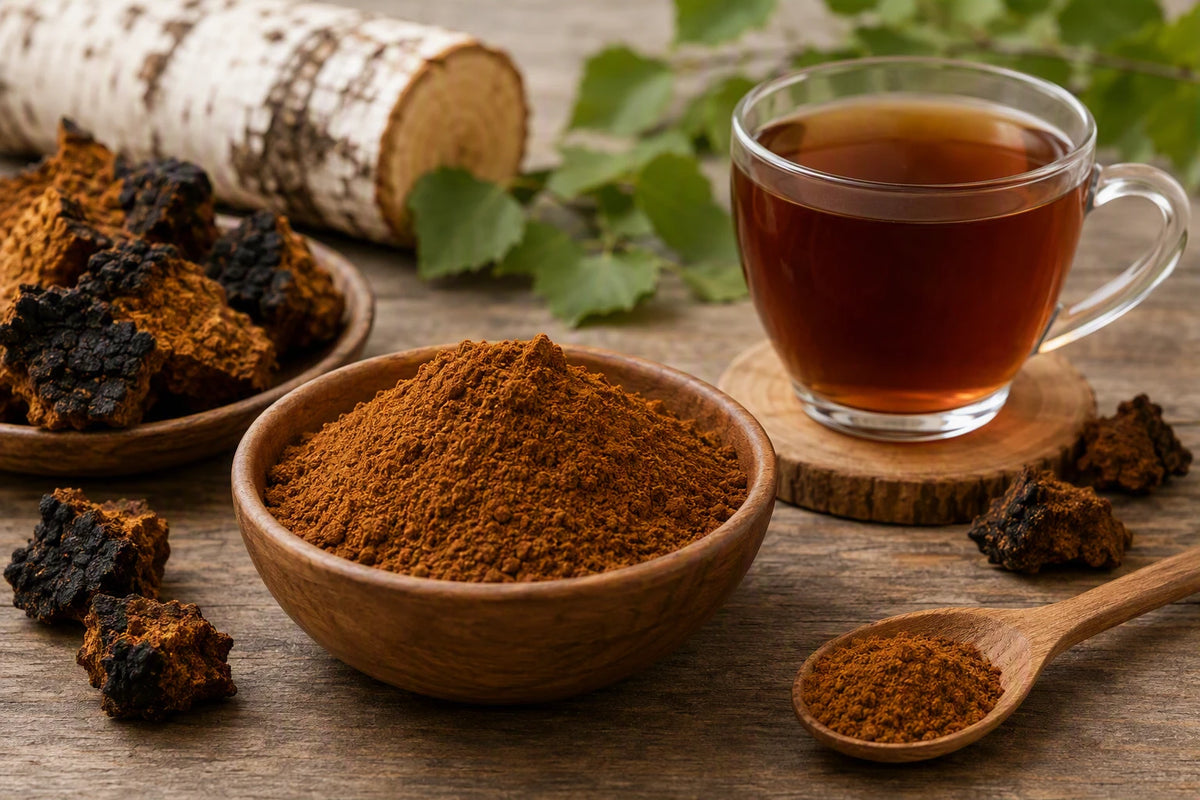
What Is Chaga Powder?
How to Use Chaga Powder
Chaga powder is most often used for brewing chaga tea, but it can also be added to other beverages depending on preference.
Basic uses include:
- Brewing chaga tea
- Adding to hot water or herbal infusions
- Incorporating into coffee or alternative drinks
- Using in recipes that require fine chaga material
For a complete step-by-step method, see how to make chaga tea.
How to Make Chaga Tea with Powder
Step-by-step:
- Add a small amount of chaga powder to water
- Heat gently below boiling (~80 °C / 176 °F)
- Stir or steep for 5–20 minutes
- Allow particles to settle or strain if desired
- Drink warm or cooled
Shorter brewing times are typically used with powder due to its fine texture.
Chaga prepared this way reflects traditional hot-water extraction methods adapted for finer formats.
Chaga Powder vs Chunks vs Tea-Cut
Chaga is available in several forms, each suited to different preparation styles.
Chaga Powder
- Fast extraction
- Best for quick preparation
- Ideal for single servings
- Limited reusability
Chaga Tea-Cut
- Moderate brewing time
- Balanced between speed and reuse
- Suitable for teapots and infusers
Chaga Chunks
- Slowest extraction
- Long simmering times
- Highly reusable
- Traditional preparation method
If you prefer longer brewing cycles, you can explore chunk-based formats in our chaga collection.
How Much Chaga Powder to Use
The amount of chaga powder used depends on preparation style and personal preference.
- Smaller amounts produce lighter tea
- Larger amounts produce a stronger brew
- Strength can also be adjusted by dilution
Brewing Tips for Chaga Powder
- Use filtered water for a cleaner taste
- Avoid boiling temperatures
- Stir during steeping for even extraction
- Strain if a smoother texture is preferred
- Start lighter and adjust strength as needed
How Chaga Powder Is Prepared
Chaga powder is made by:
- Harvesting wild chaga from birch trees
- Drying the material carefully
- Grinding into a fine powder
The powder contains both fungal material and naturally integrated birch content from the growth process.
This differs from typical culinary mushrooms, as chaga forms as a dense conk rather than a standard fruiting body.