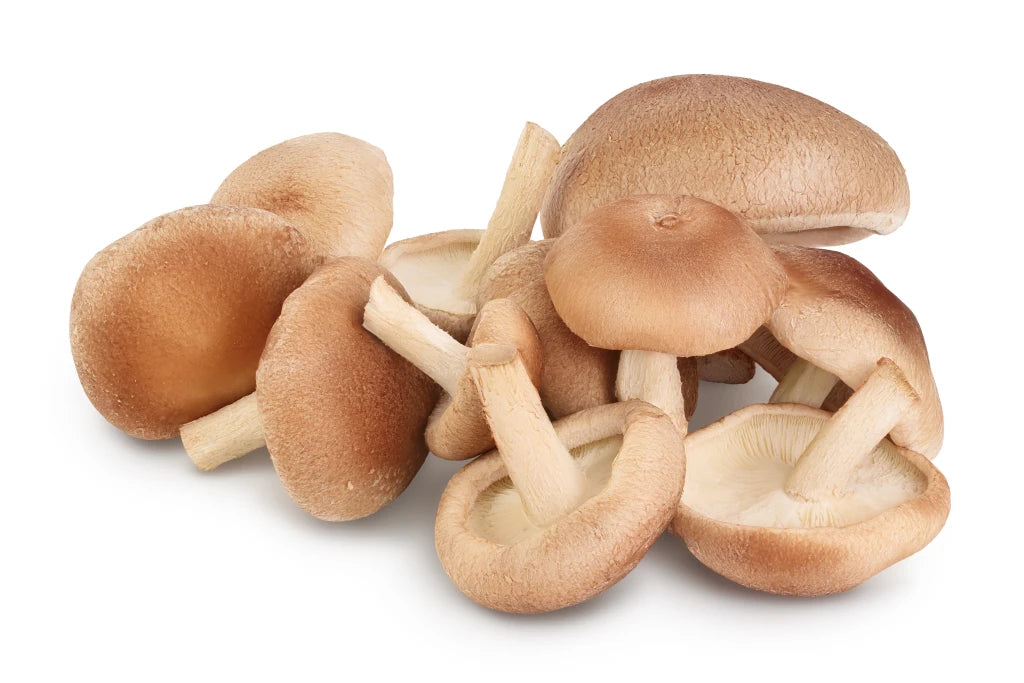
Shiitake mushroom (Lentinula edodes) is one of the most widely recognized edible mushrooms in the world. Native to East Asia, shiitake has a long history of culinary use and is now commonly available as fresh mushrooms, dried mushrooms, powders, extracts, capsules, tinctures, and other mushroom products.
Known for its rich, savory flavor and distinctive appearance, shiitake continues to be enjoyed in traditional cuisine while also appearing in a wide range of modern mushroom products.
Explore More
→ Shiitake Mushroom Benefits
→ Shiitake Mushroom Powder
→ Shiitake Mushroom Side Effects
→ Shop Shiitake Collection
Shiitake Meaning and Definition
The name "shiitake" originates from Japanese. Traditionally, "shii" refers to a type of tree associated with the mushroom's cultivation, while "take" means mushroom.
Today, shiitake is recognized around the world as one of the most popular edible mushrooms and is valued for its culinary versatility and distinctive flavor.
Shiitake Mushroom Scientific Name
The scientific name for shiitake mushroom is Lentinula edodes.
When people search for the botanical name, Latin name, or scientific name of shiitake mushroom, they are referring to Lentinula edodes, the species commonly cultivated and consumed throughout the world.
Other Names for Shiitake Mushroom
Shiitake mushroom is commonly known simply as shiitake, while its scientific name is Lentinula edodes. Depending on the source, you may also see it referred to as Japanese shiitake mushroom or by its botanical name in scientific literature.
Shiitake Mushroom Origin and History
Shiitake mushroom is native to East Asia and has been cultivated and enjoyed for centuries. Historical records describe its longstanding use as a culinary mushroom in traditional Asian cuisine.
Originally cultivated on hardwood logs, shiitake remains one of the most widely consumed mushrooms worldwide. Modern cultivation methods have made fresh, dried, powdered, and extracted shiitake products readily available.
What Is Shiitake Used For?
Shiitake mushroom has a long history of culinary use and is commonly prepared in a variety of forms.
Today, shiitake is often available as:
- Fresh mushrooms
- Dried mushrooms
- Mushroom powder
- Capsules
- Extracts
- Tinctures
When people ask what shiitake is used for, they are often interested in:
- Culinary applications
- Mushroom powders
- Shiitake extracts and tinctures
- Supplements
- Traditional food use
- Modern mushroom products
Culinary Uses of Shiitake Mushroom
Shiitake mushroom is widely appreciated for its rich, savory flavor and versatility in cooking.
Common culinary uses include:
- Soups and broths
- Stir-fries
- Grain dishes
- Noodle dishes
- Sauces
- Roasted vegetables
- Mushroom seasoning blends
Fresh shiitake mushrooms are commonly cooked and incorporated into meals, while dried shiitake mushrooms are often rehydrated and used in traditional recipes.
Because of its distinctive flavor, shiitake remains one of the most popular culinary mushrooms in the world.
What Does Shiitake Mushroom Taste Like?
Shiitake mushroom is often described as having an earthy, rich, and savory flavor. Many people associate shiitake with umami, the savory taste commonly found in mushrooms and other foods.
Fresh shiitake mushrooms typically offer a mild meaty texture, while dried shiitake mushrooms often develop a more concentrated flavor when rehydrated and cooked.
Potential Benefits of Shiitake Mushroom
Shiitake mushroom contains naturally occurring compounds including polysaccharides, beta-glucans, vitamins, minerals, and antioxidants. Researchers continue to study shiitake and its naturally occurring constituents.
Today, many people explore shiitake mushroom as part of a broader interest in edible and functional mushrooms.
Learn more → Shiitake Mushroom Benefits
What Makes Shiitake Unique?
Shiitake is recognized for several characteristics that contribute to its popularity:
- Rich culinary history
- Distinctive umami flavor
- Traditional use as a food
- Global popularity
- Availability in multiple product forms
Its combination of culinary value, traditional use, and worldwide recognition makes shiitake one of the best-known edible mushrooms.
Forms of Shiitake
Shiitake may be available as:
- Fresh mushrooms
- Dried mushrooms
- Mushroom powder
- Capsules
- Extracts
- Tinctures
Different formats may be preferred depending on cooking style, preparation method, or product preference.
Learn More About Shiitake
Explore traditional uses, culinary history, and why shiitake remains one of the most recognized mushrooms in the world.
→ Shiitake Mushroom Side Effects
Review safety considerations, preparation methods, and factors to consider when exploring shiitake products.
Learn how shiitake powder is prepared and incorporated into recipes and mushroom routines.