🍁 Autumn Season Sale | Up to 30% Off

🍁 Autumn Harvest Save up to 30%

Bundle More, Save More

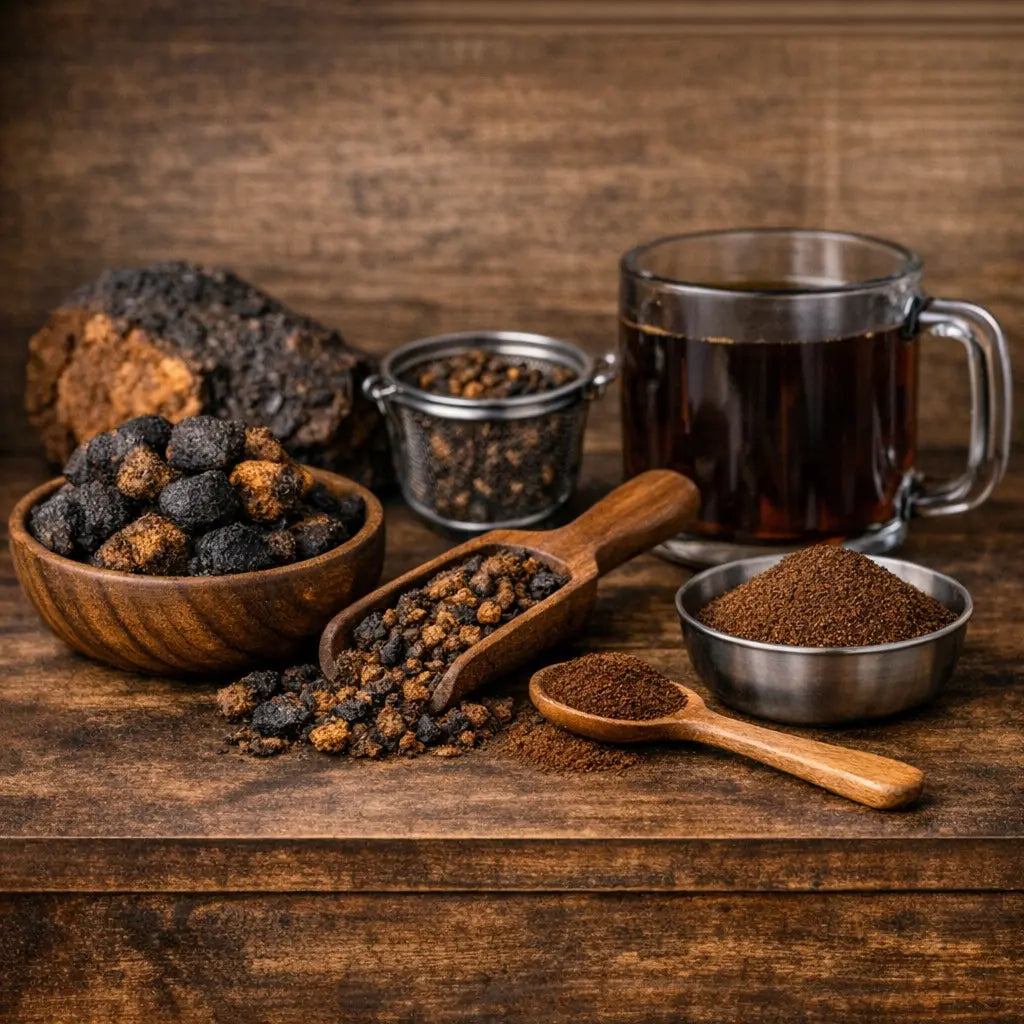
Chaga tea prepared from chaga chunks, tea-cut chaga, and chaga powder beside a cup of brewed chaga mushroom tea

Chaga Tea: How to Prepare Chaga Mushroom Tea (Step-by-Step Guide)

Chaga tea is a dark, earthy beverage made by slowly extracting chaga mushroom in hot water. It is the most common way chaga is prepared and consumed.

Unlike typical teas, chaga tea is made from a dense, woody fungal growth rather than leaves.

Chaga mushroom (Inonotus obliquus) grows on birch trees in northern forests and has been used historically as a tea in these regions. 

Chaga tea is commonly prepared using chaga chunks, chaga powder, or chaga tea-cut, with brewing methods varying depending on the format used.

This step-by-step guide explains how to prepare chaga mushroom tea using low-temperature methods, and how different forms of chaga affect the process.

Quick Answer

Chaga tea is made by gently simmering chaga chunks, tea-cut, or powder in water at approximately 80°C (176°F). Tea-cut and powdered chaga are typically brewed for 20-30 minutes, while larger chaga chunks are often brewed for several hours and may be reused multiple times.

Chaga Tea Recipe ⭐

Yield: Approximately 4 cups (1 litre)

What You Need

  • Dried chaga (chunks, tea-cut, or powder)
  • Fresh filtered water
  • Optional: ginger, maple syrup, lemon

Ingredients

  • 1 tablespoon chaga tea-cut or powder
  • 4 cups (1 litre) filtered water

Method

  1. Add chaga to water.
  2. Heat to approximately 80°C (176°F).
  3. Simmer gently for 20-30 minutes.
  4. Strain before serving.
  5. Refrigerate unused tea for later use.

Optional Additions

  • Maple syrup
  • Ginger
  • Lemon
  • Cinnamon


Brewing time and tea strength may be adjusted depending on the type of chaga used and personal preference.

This basic chaga mushroom tea recipe works well with chaga tea-cut and chaga powder. If using larger chaga chunks, longer simmering times are typically recommended.

Chaga chunks are often reused multiple times until the brewed tea becomes noticeably lighter in colour.

→ How To Brew Chaga Chunks 

Looking for a quicker preparation method? 

→ How To Brew Chaga Powder

→ Shop Organic Chaga Powder

What is Chaga Tea?

Watch our video on how to prepare chaga tea

Chaga tea is a traditional hot water extract made by slowly heating chaga mushroom below boiling, typically around 80 °C / 176 °F. This gradual extraction produces a dark, earthy liquid with a mild, slightly bitter taste.

This method has long been used in northern forest regions where chaga grows naturally on birch trees.

Chaga tea is most commonly prepared using chunks, tea-cut pieces, or powdered chaga, with preparation time varying depending on the format. The resulting tea can be consumed hot or cooled, and the chaga material is often reused multiple times.

Why Do People Drink Chaga Tea?

People have traditionally prepared chaga tea as a hot water beverage in regions where chaga grows naturally on birch trees.

Today, people choose chaga tea for many reasons, including:

  • Its earthy flavour profile
  • Its caffeine-free nature
  • Its long history of traditional use
  • Its versatility as a hot or cold beverage
  • Its connection to wild-harvested forest ingredients

Some people enjoy chaga tea as an alternative to coffee or traditional herbal teas, while others appreciate the ritual of slow brewing using chunks or tea-cut chaga.

What Does Chaga Tea Taste Like?

Chaga tea has an earthy, slightly woody flavour that many people compare to mild black tea or coffee alternatives.

The taste varies depending on brewing time, concentration, and the form of chaga used. 

Longer brewing typically produces a darker and more robust flavour, while lighter preparations create a milder tea.

Many people enjoy chaga tea on its own, while others add ginger, maple syrup, cinnamon, or lemon to customize the flavour.

Learn more in our guide:

cup of chaga tea with chaga mushroom chunks on a wooden table scene

What's in Chaga Tea?

Chaga tea is prepared using hot water extraction. During brewing, naturally occurring compounds present in chaga are released into the tea.

The exact composition varies based on brewing time, temperature, chaga format, and the number of extractions performed.

Chaga Tea Formats: Chunks, Tea-Cut, and Powder

Chaga tea can be prepared using chunks, tea-cut pieces, or powder. If you're unsure which format is best, see our chaga grind selector.

Chaga Tea-Cut (Standard Grind)

The most popular format for everyday preparation.

  • Best for teapots, stovetop brewing, or infusers
  • Brewing time: 20 minutes to several hours
  • Reusable multiple times

Chaga Chunks

One of the most traditional preparation methods.

  • Best for stovetop simmering or slow cookers
  • Brewing time: 1–12 hours or longer
  • Reusable multiple times

 For a detailed breakdown of preparation methods, see our guide to chaga chunks and how to use them.

Chaga Powder

A quick, modern preparation option.

  • Best for single servings or cup brewing
  • Brewing time: 5–20 minutes
  • Limited reusability

For more on quick preparation methods, see our guide to using chaga powder.

If you're looking for whole pieces, you can explore our chaga chunks and tea formats.

For an overview of how chaga is used across different formats, see our guide on how to use chaga mushrooms.

How to Brew Chaga Tea (Temperature and Method)

Chaga tea is brewed using gentle heat below boiling, typically around 80 °C / 176 °F. This allows the material to extract gradually over time.

Excessive heat may alter the extraction process, which is why slow simmering or steeping has long been preferred.

How Long to Brew Chaga Tea (Steeping and Simmering Time)

Brewing time depends on the form of chaga used.

  • Powder or tea-cut: typically 10–30 minutes
  • Chunks: often simmered for several hours

Longer brewing allows for gradual extraction, while shorter steeping is suited to finer formats.

How Strong Should Chaga Tea Be?

Chaga tea strength depends on brewing time, material size, and quantity used.

Longer simmering produces a darker, more concentrated tea, while shorter steeping results in a lighter brew. Strength can also be adjusted by dilution.

How Long Does Chaga Tea Last?

Brewed chaga tea can typically be stored in the refrigerator for up to 14 days when kept in a sealed container. For longer storage, chaga tea may be frozen and reheated gently when needed.

How to Drink Chaga Tea

Chaga tea may be consumed hot or cooled.

  • Drink as a daily beverage
  • Dilute stronger brews
  • Pair with herbs or natural flavourings

Chaga tea is naturally caffeine-free and does not produce stimulant effects, making it suitable for any time of day.

For more guidance on frequency and daily use, see our guide to how chaga is used.

In addition to its use as a beverage, chaga has also been explored in traditional contexts beyond tea preparation, including external and topical applications.

Chaga Tea vs Coffee

Both chaga tea and coffee are commonly enjoyed as hot beverages, but they are prepared differently. Chaga tea is brewed from chaga mushroom and is naturally caffeine-free, while coffee is brewed from roasted coffee beans and contains caffeine.

Some people enjoy chaga tea as an alternative to coffee, while others appreciate its earthy flavour, traditional preparation methods, and versatility as a hot or cold beverage.

Additional Brewing Tips

  • Use a tea ball or bag for easier reuse
  • Strong tea can be diluted
  • Tea may be reheated gently
  • Can be enjoyed hot or chilled

Related Reading

How to use chaga mushroom with traditional preparations including chaga tea, chaga chunks, chaga powder, and chaga tincture.

Chaga Tea vs. Chaga Tincture

Chaga tea is prepared through hot water extraction and consumed as a beverage.

Chaga tinctures are liquid extracts prepared using different methods and are typically taken in smaller quantities. 

Freshly brewed chaga tea beside wild chaga on a birch tree with a coffee cup in a Canadian boreal forest, illustrating the difference between traditional chaga tea and coffee.

Is Chaga Tea Caffeinated?

Chaga tea is naturally caffeine-free and does not contain coffee, tea leaves, or other common caffeine sources.

Chaga Tea - FAQ

Chaga tea is a hot water extract made from chaga mushroom (Inonotus obliquus). It is traditionally prepared by slowly heating chaga below boiling to create a dark, earthy beverage.

Chaga tea is typically made by adding chaga powder, tea-cut pieces, or chunks to water, heating to approximately 80°C (176°F), and simmering or steeping depending on the format used. The liquid is then strained before drinking.

Chaga tea is generally brewed using gentle heat below boiling. Powder and tea-cut chaga are often steeped or simmered for shorter periods, while larger chaga chunks may be simmered for several hours.

Brewing time varies depending on the form used. Chaga powder or tea-cut preparations are typically brewed for 10-30 minutes, while chunks are often simmered for several hours.

Chaga tea is commonly brewed at approximately 80°C (176°F), which is below boiling and allows for gradual extraction over time.

Yes. Chaga chunks and tea-cut preparations are often reused multiple times until the brewed liquid becomes noticeably lighter in colour.

No. Chaga tea is naturally caffeine-free and does not contain caffeine.

Learn More - Does Chaga Tea Have Caffeine?

Chaga tea is made from the chaga mushroom, a birch-growing fungus, typically in chunk, tea-cut, or powder form, extracted slowly in hot water.

Chaga tea has a mild earthy flavour with subtle woody notes and a slight natural bitterness. Brewing time and strength may influence the taste.

Learn More: What Does Chaga Tea Taste Like?

Many people choose to enjoy chaga tea as a daily beverage. If you have questions about personal use, medications, or health considerations, consult a qualified healthcare professional.

Disclaimer

This content is for educational purposes only and does not provide medical advice. Consult a qualified healthcare professional before use.

Updated: September 2026