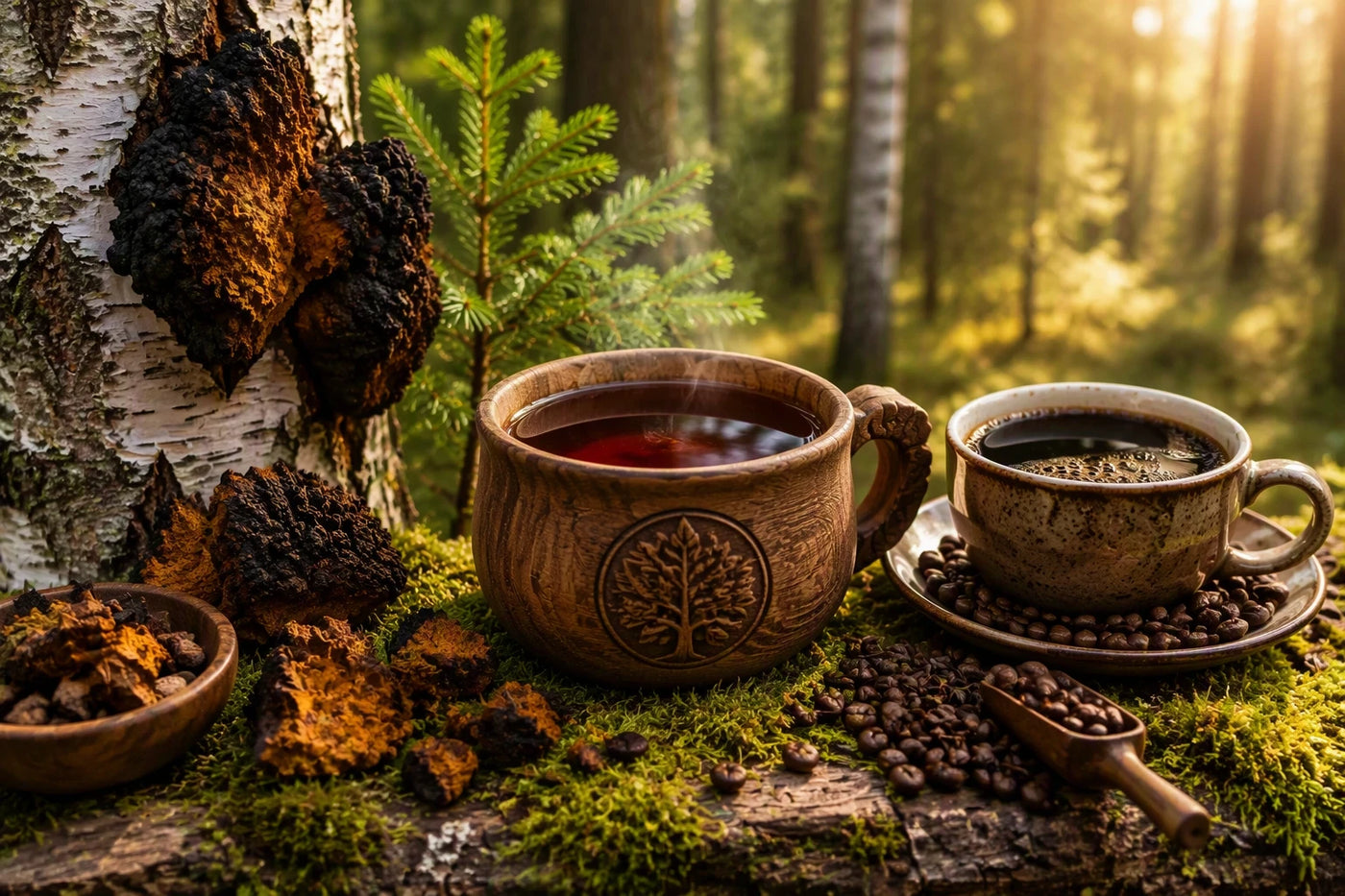
One of the most frequently asked questions about chaga tea is whether it contains caffeine.
Chaga tea is traditionally prepared by steeping or simmering dried birch chaga (Inonotus obliquus) in hot water. Unlike coffee beans, black tea leaves, and many caffeinated beverages, chaga itself is a fungus that naturally grows on birch trees.
Does Chaga Tea Contain Caffeine?
Chaga does not naturally contain caffeine.
Traditional chaga tea is prepared using only chaga and water and is generally considered a caffeine-free beverage.
Because no coffee beans, tea leaves, or other common caffeine sources are used, brewed chaga tea is typically enjoyed as a naturally caffeine-free drink.
Is Chaga Tea Caffeine Free?
When prepared using only dried chaga and water, chaga tea is generally considered caffeine free.
However, some mushroom beverages and mushroom coffee products may contain added coffee or tea ingredients. In those cases, any caffeine present comes from those ingredients rather than from the chaga itself.
Always review the ingredient list of prepared beverage products if caffeine content is important to you.
Why Do People Ask if Chaga Contains Caffeine?
Many people discover chaga while searching for alternatives to coffee or traditional tea.
Questions commonly include:
- Does chaga tea have caffeine?
- Is chaga tea caffeine free?
- Can chaga replace coffee?
- How much caffeine is in chaga tea?
Because chaga is often brewed as a warm beverage, it is frequently compared to coffee and tea even though it is prepared differently.
Chaga Tea vs Coffee
Although both are consumed as hot beverages, chaga tea and coffee are very different.
Chaga Tea
- Prepared from dried birch chaga
- Traditionally simmered or steeped
- Earthy, smooth flavour
- Naturally caffeine free
- Commonly consumed as a traditional mushroom tea
Coffee
- Prepared from roasted coffee beans
- Brewed using various extraction methods
- Contains naturally occurring caffeine
- Commonly consumed as a caffeinated beverage
Some people enjoy both beverages as part of different daily routines depending on personal preference and preparation style.
Can Chaga Replace Coffee?
People use chaga tea and coffee for different reasons.
Some enjoy chaga tea because it is naturally caffeine free, while others continue to enjoy traditional coffee beverages.
Preparation method, flavour preference, and individual routines all influence how people incorporate these beverages into everyday life.
How Is Chaga Tea Traditionally Prepared?
Traditional chaga tea is commonly prepared by:
- Simmering chaga chunks
- Brewing coarse chaga granules
- Using ground chaga powder
- Preparing slow-brewed decoctions
Because chaga has a dense structure, preparation often involves longer brewing times than many conventional teas.
For complete instructions, see How to Make Chaga Tea.