What Is Lion’s Mane Mushroom?
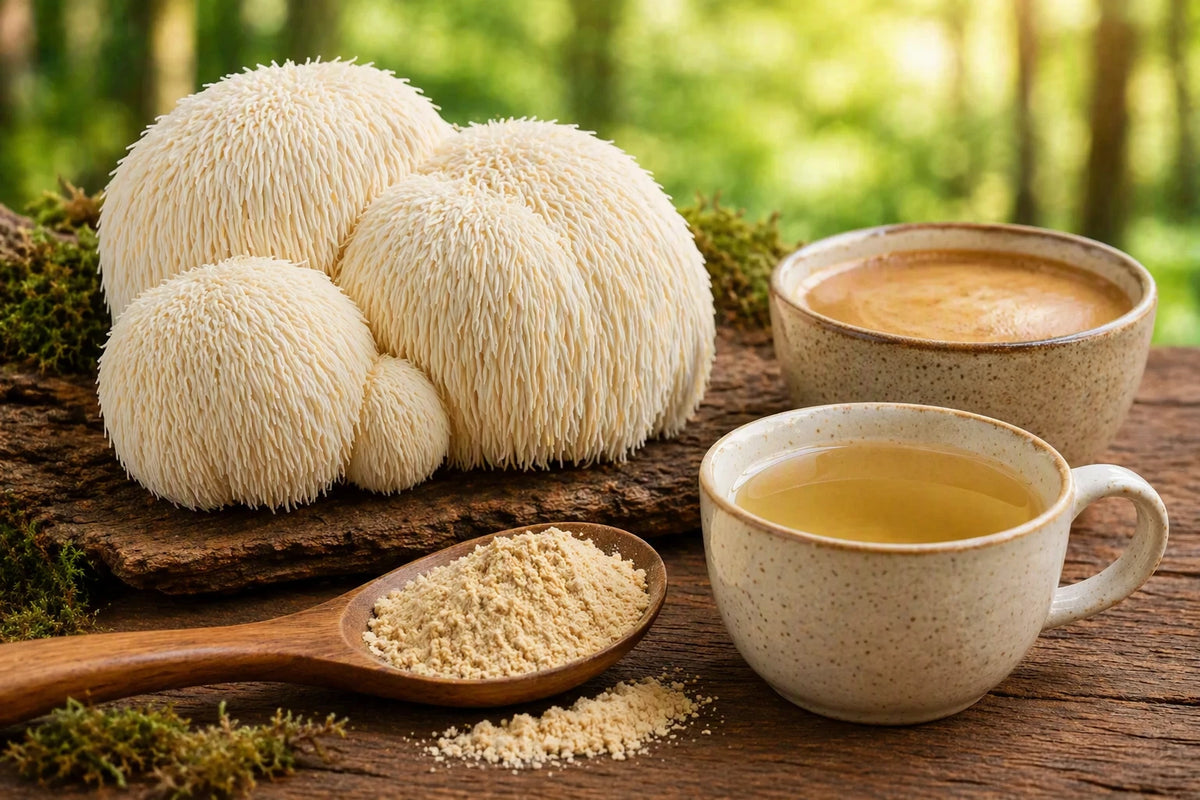
Lion’s Mane (Hericium erinaceus) is a white edible mushroom recognized by its distinctive cascading spines that resemble a lion's mane. Unlike many mushrooms that develop a traditional cap and stem, Lion’s Mane forms a rounded fruiting body covered in soft white teeth.
Today, Lion’s Mane is one of the most recognized functional mushrooms in the world and is commonly prepared as:
- Mushroom powder
- Liquid tinctures
- Mushroom coffee
- Capsules
- Culinary mushrooms
- Functional mushroom blends
Lion’s Mane is often discussed alongside Chaga, Reishi, Turkey Tail, Cordyceps, Maitake, and Shiitake as one of the leading functional mushrooms available today.
Quick Answer
Lion’s Mane (Hericium erinaceus) is a white edible mushroom known for its cascading spines and distinctive appearance. It is commonly prepared as powders, tinctures, mushroom coffee, capsules, and culinary mushrooms and is one of the most recognized functional mushrooms available today.
Explore Organic Lion's Mane
Whether you're looking for mushroom powder, tincture, or mushroom coffee, Annanda offers several ways to incorporate Lion's Mane into your daily routine.
Why Customers Choose Annanda
- Canadian company
- Organically cultivated Lion's Mane
- Third-party tested
- Full traceability
- Powder, tincture, and mushroom coffee formats
- Fast shipping across Canada
Why Choose Annanda Lion’s Mane?
Not all Lion’s Mane products are produced in the same way.
Annanda’s Lion’s Mane products are:
- Organically cultivated
- Grown in Canada
- Third-party tested
- Produced with complete traceability
- Available as powder, tincture, and mushroom coffee
- Supported by laboratory analysis
- Full-spectrum fungal ingredients
Verified Composition
- Beta-Glucans: >30%
- Total Polysaccharides: >50%
- Alpha-Glucans: <9%
Every batch is supported by independent testing and quality verification.
→ View Lion’s Mane Purity & Certifications
Table of Contents
- What Is Lion’s Mane Mushroom?
- Why Is Lion’s Mane So Popular?
- What Makes Lion’s Mane Unique?
- Naturally Occurring Compounds Found in Lion’s Mane
- What Are Lion’s Mane Products?
- Lion’s Mane Powder vs Tincture vs Coffee
- How to Identify Lion’s Mane
- Where Does Lion’s Mane Grow?
- Is Lion’s Mane Edible?
- Fruiting Body vs Mycelium
- How Is Lion’s Mane Used?
- Choosing the Right Format
- Lion’s Mane FAQ
Why Is Lion’s Mane So Popular?
Lion’s Mane has become one of the most widely recognized functional mushrooms available today.
People are interested in Lion’s Mane because of:
- Its unique appearance
- Its culinary versatility
- Its availability in powders, tinctures, and coffee blends
- Its long history of traditional use
- Growing interest in functional mushrooms
- Ongoing scientific research
Many people begin their exploration of functional mushrooms with Lion’s Mane before expanding into Chaga, Reishi, Turkey Tail, Cordyceps, Maitake, and Shiitake.
Continue Exploring
What Makes Lion’s Mane Unique?
Lion’s Mane mushroom is easily recognized by its cascading white spines and distinctive appearance.
Unlike mushrooms that produce traditional caps and stems, Lion’s Mane develops a rounded fruiting body covered with soft icicle-like teeth.
Its unique appearance, culinary versatility, and increasing popularity have made it one of the most recognizable functional mushrooms available today.
Naturally Occurring Compounds Found in Lion’s Mane
Researchers continue to study the naturally occurring compounds present in Lion’s Mane mushrooms.
These include:
- Beta-glucans
- Polysaccharides
- Hericenones
- Erinacines
- Phenolic compounds
Scientific understanding continues to evolve as interest in functional mushrooms grows and researchers investigate the compounds naturally present within mushroom species.
Lion's Mane Benefits
Interest in Lion's Mane continues to grow as consumers explore functional mushrooms and researchers study the naturally occurring compounds found within Hericium erinaceus.
People commonly explore Lion's Mane because of:
- Its long history of traditional use
- Its culinary versatility
- Its naturally occurring compounds including beta-glucans, hericenones, and erinacines
- Its availability in powders, tinctures, mushroom coffee, and other formats
- Ongoing scientific research
→ Explore Lion's Mane Benefits
What Is the Best Lion’s Mane Supplement?
Lion’s Mane is available in several common formats.
Lion’s Mane Powder
Ideal for:
- Coffee
- Tea
- Smoothies
- Recipes
- Flexible serving sizes
Lion’s Mane Tincture
Ideal for:
- Convenience
- Travel
- Daily routines
- Simple supplementation
Lion’s Mane Mushroom Coffee
Ideal for:
- Coffee drinkers
- Morning routines
- Functional mushroom beginners
Compare Lion’s Mane Products
Explore Lion’s Mane Products
Lion’s Mane Mushroom Powder
Finely ground and easy to incorporate into beverages and recipes.
Suitable for:
- Coffee
- Tea
- Smoothies
- Baking
- Cooking
Lion’s Mane Tincture
A liquid extract format often selected for convenience and portability.
Lion’s Mane Mushroom Coffee
A roasted coffee blend combined with Lion’s Mane mushroom.
Lion’s Mane Compared to Other Functional Mushrooms
Lion’s Mane is one of several popular functional mushroom species.
Many people compare it with:
- Chaga
- Reishi
- Turkey Tail
- Cordyceps
- Maitake
- Shiitake
Each species has its own growing environment, preparation methods, culinary traditions, and product formats.
Learn More
How to Identify Lion’s Mane Mushroom
Lion’s Mane (Hericium erinaceus) is easily recognized by its distinctive cascading white spines.
Characteristics include:
- White appearance
- Icicle-like teeth
- Rounded fruiting body
- No cap
- No stem
- Growth on hardwood trees
Its appearance is unlike almost any other mushroom found in North American forests.
Lion’s Mane Fruiting Body vs Mycelium
Consumers often encounter products made from:
- Fruiting body
- Mycelium
- Full-spectrum ingredients containing multiple fungal components
Understanding these differences can help consumers compare various Lion’s Mane products.
Where Does Lion’s Mane Grow?
Lion’s Mane grows naturally on hardwood trees in temperate forests throughout:
- North America
- Europe
- Asia
Today, Lion’s Mane is also cultivated under controlled conditions to provide a reliable and sustainable source for culinary and supplemental use.
Is Lion’s Mane Edible?
Yes.
Lion’s Mane is widely consumed as a food and is valued for its mild flavour and unique texture.
Fresh Lion’s Mane can be:
- Sautéed
- Roasted
- Added to recipes
Powdered Lion’s Mane may be used in:
- Coffee
- Tea
- Smoothies
- Soups
- Sauces
- Other foods
How Is Lion’s Mane Typically Used?
Lion’s Mane can be incorporated into everyday routines in a variety of ways.
Powder
May be mixed into:
- Coffee
- Tea
- Smoothies
- Recipes
Tincture
A concentrated liquid extract format used in small servings.
Mushroom Coffee
A blend of coffee and mushroom ingredients for a familiar beverage experience.
Choosing the Right Lion’s Mane Format
Lion’s Mane Powder
Best for people who want maximum flexibility and enjoy adding mushrooms to drinks or recipes.
Lion’s Mane Tincture
Best for convenience and travel.
Lion’s Mane Mushroom Coffee
Best for coffee drinkers seeking a simple way to incorporate Lion’s Mane into an existing routine.
Is Lion’s Mane Safe?
Lion’s Mane is generally well tolerated, although individual responses may vary.
For a detailed discussion, see:
How Lion’s Mane Is Prepared at Annanda
Annanda’s Lion’s Mane is organically cultivated under controlled growing conditions.
It is never wild harvested.
Benefits of this approach include:
- Consistent production
- Ingredient traceability
- Reduced contamination risk
- Sustainable cultivation practices
- Reliable supply
Every batch is produced with a focus on quality, transparency, and consumer confidence.
When Is Lion’s Mane Ready to Harvest?
Lion’s Mane is typically harvested when its white spines have elongated but remain bright white.
Harvest timing is important because growers generally seek full development while preserving quality and appearance.
→ When to Harvest Lion’s Mane Mushrooms