🇨🇦 Canadian family-owned • Shipping within Canada only

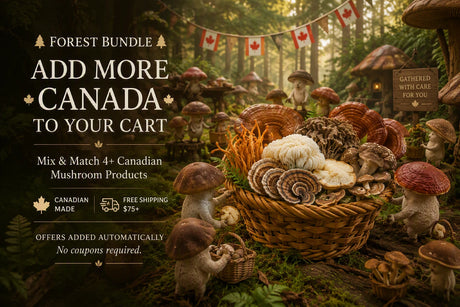
🌲 Build Your Mix & Match Forest Bundle

🎁 Complimentary Chaga & Reishi Extract Orders $150+

Mushroom forest with tall trees and green grass

Welcome to The Annanda ChagapediA

Welcome to The Annanda ChagapediA—your trusted resource for understanding wild chaga from the boreal forests of Northern Ontario. Our journey began in 2012, bringing together forest wisdom and chaga research into a growing library of clear, grounded knowledge rooted in experience.

Chaga Tea — Preparation, Taste & Daily Use

Understanding how to prepare and experience chaga as a tea is one of the most common starting points. This section brings together practical guidance on brewing, flavour, storage and everyday use—based on real harvesting experience and traditional preparation methods.

Explore Chaga Tea Topics

To prepare chaga tea at home, many people use ready-to-use forms such as chunks or coarse powder.
Learn more about chaga tea

Chaga Mushroom FAQ

The following questions cover what chaga is, how it is used, how it is prepared, and how it is identified in natural environments.

What is Chaga

Chaga is a unique fungus that grows primarily on birch trees in northern forests and differs significantly from typical mushrooms. The following questions explain what chaga is, how it forms, and how to recognize it in natural environments.

Chaga is a fungus that grows on birch trees in cold northern forests and appears as a dark, irregular mass on the outside of the tree.

To learn more about how to identify chaga:

Chaga Mushroom Identification

Chaga mushroom refers to the fungus Inonotus obliquus, which forms a dense growth on birch trees and is traditionally used as a slow-brewed tea.

To understand how to recognize chaga in nature:

→ Chaga Mushroom Identification

Chaga is a fungus, but it does not grow like typical mushrooms.

It forms a hardened mass rather than a cap-and-stem fruiting body.To learn how chaga differs visually from other mushrooms:

Chaga Mushroom Identification

Chaga appears as a rough, black growth on birch trees, often resembling burnt charcoal, with an orange-brown interior when broken.

For full identification details:

Chaga Mushroom Identification

The phrase “chaga good for” is commonly used to describe traditional use, preparation methods, and how chaga is incorporated into daily routines rather than a single defined outcome.
What Is Chaga Used For

Chaga grows primarily on birch trees in cold northern forests such as Canada and Northern Europe.

To understand where and how it grows:

What Is Chaga

What trees does chaga grow on?Chaga grows mainly on birch trees, which play a role in how the fungus develops and absorbs compounds.To learn more about its growth:→ What Is Chaga

Chaga is not typically used as a fruiting body. The material commonly used is a dense structure known as a sclerotium that forms on birch trees.

To understand how this differs from fruiting body and full-spectrum mushroom products:
Full-Spectrum vs Fruiting Body Mushrooms

The part commonly used is the hardened outer growth formed on birch trees, rather than the fruiting body of the fungus.

To understand this structure:→ Chaga Mushroom Identification

Chaga is most commonly used as a slow-brewed tea prepared from chaga chunks, powder, or extract. It is typically incorporated into daily routines rather than used for immediate or short-term effects.

For a detailed explanation of how chaga is prepared and used:
What Is Chaga Used For

How to Use Chaga

Chaga is traditionally prepared using slow extraction methods such as tea, powder, or tinctures. The following questions explore how chaga is used in daily routines.

Chaga is most commonly prepared by simmering it in water over time to make a tea, though it can also be used as powder or extract.

For a full guide:→ How to Use Chaga

Chaga is most commonly prepared by simmering it in water over time to make a tea, though it can also be used as powder or extract.

For a full guide:→ How to Use Chaga

Chaga is too dense to be eaten raw and is typically prepared through simmering or extraction.

To learn proper methods:
How to Use Chaga

Chaga chunks can often be reused multiple times as long as they still produce a dark, rich tea.

For full preparation guidance:
How to Make Chaga Tea

Chaga contains naturally occurring compounds that are extracted through preparation methods such as tea or tincture.

To learn how chaga is prepared:
How to Use Chaga

When to Take Chaga

Chaga is often incorporated into daily routines, though timing and frequency can vary depending on preparation method and individual use. These questions explore how chaga fits into typical usage patterns.

Chaga is often used as part of a regular routine, though frequency varies depending on preparation and individual preferences.

For guidance on use:
How to Use Chaga

Chaga can be used at different times of day depending on routine, often as a tea prepared over longer periods.

To understand usage patterns:
How to Use Chaga

Chaga Mushroom Safety

Chaga has a long history of traditional use, though modern discussions often include considerations around preparation, frequency, and individual factors. The following questions address common safety-related topics.

Chaga has a long history of traditional use, though individual factors such as preparation and frequency should be considered.

For safety information:
Is Chaga Safe

Some individuals may need to consider factors such as diet, medications, or personal circumstances when using chaga.

For full safety considerations:
Is Chaga Safe

Chaga naturally contains compounds including oxalates, which are often discussed in relation to preparation and use.

For more details:
Is Chaga Safe

Chaga has a long history of traditional use, though modern discussions often include consideration of factors such as preparation, frequency, and individual circumstances.

For more detailed information:
Is Chaga Safe

Chaga Mushroom Products

Chaga is available in several formats, including chunks, powder, and liquid extracts, each suited to different preparation methods. These questions help clarify the differences between common forms of chaga.

Chaga is commonly available as chunks, powder, and tinctures, each suited to different preparation methods.

To compare formats:
Chaga Gride Guide

Chaga tincture is a liquid extract made using water, alcohol, or both, offering a ready-to-use format.

To learn more:
Chaga Tincture Guide

Chaga tea is traditionally brewed as a simple water-based infusion, while mushroom elixirs are often beverage-style concentrates.
Annanda Wild Chaga Tea Concentrate — Traditional Chaga Elixir

How To Make Chaga Tea

Because chaga has a dense structure, it is typically prepared using longer extraction methods rather than quick steeping. The following questions focus on practical preparation details and methods. For a full step-by-step preparation process:→ How to Make Chaga Tea

Chaga is typically simmered for an extended period to allow proper extraction rather than steeped quickly.

For detailed instructions:
How to Make Chaga Tea

Properly prepared chaga tea is usually a deep amber or dark brown color.

To learn more:
How to Make Chaga Tea

Chaga is typically prepared by slowly simmering it in water to extract its compounds over time.

To learn the full process:
How to Make Chaga Tea

Chaga tea is made by simmering chaga in water rather than steeping it quickly, due to its dense structure.

To see the full method:
How to Make Chaga Tea

Harvesting Chaga

Chaga is most often wild-harvested from northern forests where it grows naturally on birch trees. These questions explore sourcing, harvesting practices, and environmental factors that influence chaga quality.

Wild-harvested chaga refers to chaga collected from living birch trees in natural forest environments.

To learn more about sourcing:
What Is Chaga

Canadian chaga refers to chaga found in northern Canadian forests where birch trees grow naturally.

To explore sourcing and environment:
What Is Chaga

Common Questions About Chaga

Many questions about chaga relate to everyday use, taste, and how it compares to familiar beverages. The following answers address practical and commonly asked questions.

Chaga is naturally caffeine-free and is often used as an alternative to coffee or tea.

To learn more about usage:
How to Use Chaga

Some people use chaga tea as an alternative to coffee, though it has a different taste and preparation method.

To explore usage:
How to Use Chaga

Chaga has a mild, earthy flavour that is often described as smooth and slightly woody, without the bitterness of many other mushrooms.

To learn how preparation affects flavour:
How to Make Chaga Tea

Chaga tea has a smooth, mild taste that is often compared to a light herbal or earthy infusion, with subtle natural notes depending on how it is prepared.

To learn how preparation affects flavour:
How to Make Chaga Tea

Dried chaga can be stored for a long time when kept in a cool, dry place, while brewed chaga tea has a shorter shelf life depending on storage conditions.

To learn how to store chaga properly:
How to Store Chaga

The shelf life of chaga depends on how it is stored. Dried chaga can last for a long time when kept in a cool, dry place, while brewed chaga tea has a shorter shelf life and should be stored properly.

To learn how to store chaga properly:
How to Store Chaga

Chaga Mushroom Identification

Identifying chaga mushroom is an important step before harvesting or preparation. The following questions explore how to recognize chaga in the wild, including where it grows, what it looks like, and how to distinguish it from other tree formations.

Chaga is identified by its rough, black outer surface and its growth on birch trees, often resembling burnt charcoal.

To learn how to properly identify chaga:
Chaga Mushroom Identification

Chaga appears as a black, rough, and uneven mass growing directly from the bark of a birch tree, often with deep cracks in the surface.

To see examples and learn how to recognize it:
Chaga Mushroom Identification

When broken open, chaga reveals a contrasting interior that is typically orange to rust-brown and cork-like in texture.

To learn how to confirm identification:
Chaga Mushroom Identification

Chaga grows in cold northern forests and is most commonly found on birch trees.

To understand where to find chaga and how it grows:
Chaga Mushroom Identification

Chaga is most often found by looking for dark, irregular growths on the trunks of birch trees in colder forest regions.

To learn how to recognize it:
Chaga Mushroom identification

The fruiting body of chaga is rarely seen in nature and develops beneath the bark of the host tree rather than on the surface.

The part commonly recognized and harvested as chaga is not the fruiting body, but a dense, irregular mass formed on the outside of birch trees.

To see how chaga forms and how to recognize it:
Chaga Identification - Fruiting Body

Real chaga has a rough black outer surface, grows on birch trees, and reveals an orange-brown interior when broken.

To confirm identification:
Chaga Mushroom Identification

Real chaga grows on birch trees and has a black outer crust with an orange-brown interior, while false chaga may lack this contrast or grow on other trees.

To avoid confusion
:→ Chaga Mushroom Identification

The part commonly used is the hardened outer growth formed on birch trees, rather than the fruiting body of the fungus.

To understand this structure:→ Chaga Mushroom Identification

Chaga is typically found by looking for dark, irregular growths on the trunks of living birch trees in colder forest regions.

To learn how to recognize it in the wild:
Chaga Mushroom Identification

The Annanda Chagapedia

Explore The Annanda ChagapediA—an evolving resource dedicated to wild-harvested Canadian chaga from the boreal forests of Northern Ontario. Built on years of hands-on harvesting experience, this library brings together practical knowledge on how chaga is sourced, prepared, and used—alongside clear guidance on topics like chaga tea, identification, and quality.