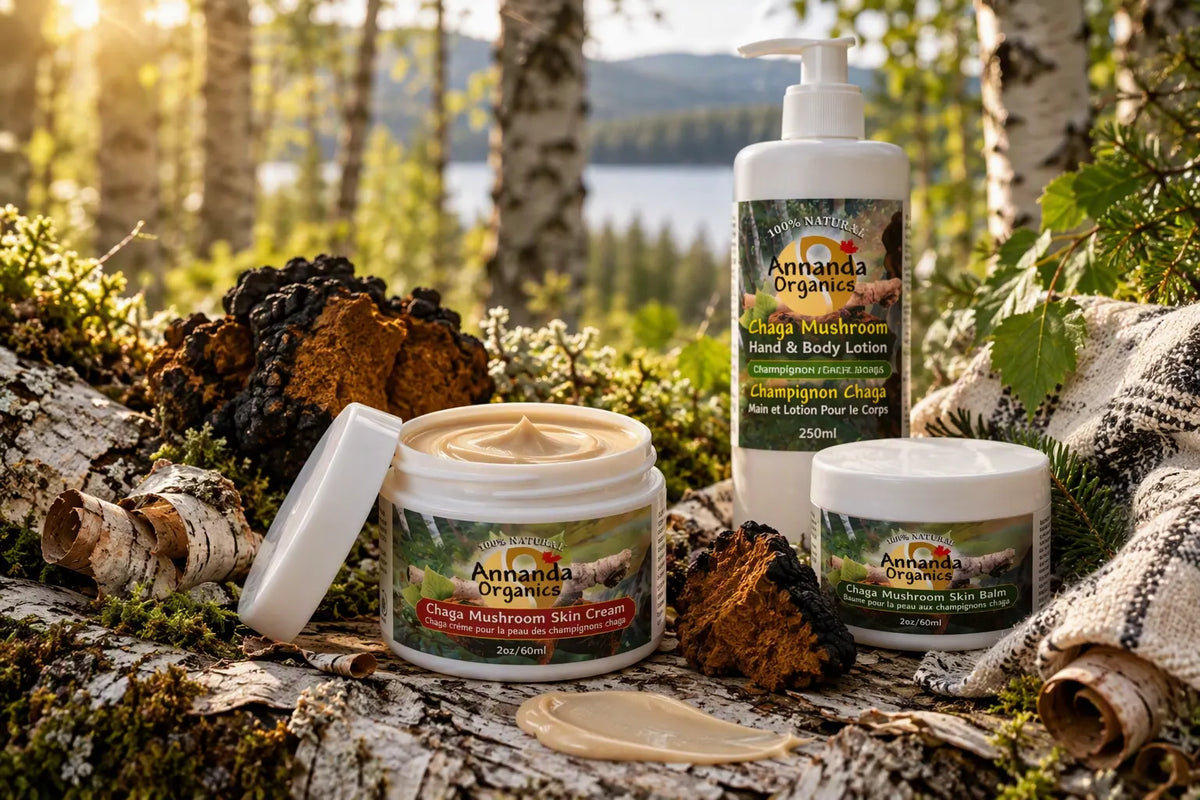
What Is Chaga Skin Care?
Chaga skin care refers to topical cosmetic products that include chaga-derived ingredients as part of a finished formulation intended for external use.
Common examples include:
- Chaga skin cream
- Chaga skin balm
- Chaga hand & body lotion
- Chaga mushroom soap
- Chaga beard oil
- Botanical skin care products containing chaga extract
These products range from lightweight daily moisturizers to richer balms and oils designed for targeted skin care and grooming.
→ Shop Chaga Mushroom Skin Care
Types of Chaga Skin Care Products
| Product | Typical Texture | Common Use |
|---|---|---|
| Chaga Skin Cream | Lightweight | Face and hands |
| Chaga Skin Balm | Rich and protective | Dry skin areas |
| Chaga Hand & Body Lotion | Light moisturizing lotion | Daily body care |
| Chaga Beard Oil | Lightweight oil | Beard and skin care |
| Chaga Mushroom Soap | Cleansing bar | Everyday washing |
Most formulations combine chaga with botanical oils, waxes, butters, and moisturizing ingredients.
Chaga Mushroom Soap
Chaga mushroom soap remains one of the most popular forms of topical chaga skin care.
Traditionally crafted using cold-process soap making, chaga soap combines chaga extract with plant-based oils and botanical ingredients to create a cleansing bar for external use.
Today, handcrafted mushroom soap continues to attract interest among those seeking forest-inspired personal care products.
→ Shop Chaga Man® Natural Mushroom Soap
→ Learn How Annanda Chaga Mushroom Soap Is Made
Why Is Chaga Used in Skin Care?
- Skin creams
- Balms
- Lotions
- Soaps
- Beard oils
- Other cosmetic products
In modern formulations, chaga is typically used alongside other botanical ingredients rather than as a stand-alone ingredient.
Chaga in Modern Cosmetic Research
In recent decades, chaga has attracted interest in cosmetic science and formulation research due to its complex natural composition.
Researchers studying botanical cosmetic ingredients often examine:
- Stability within cosmetic formulations
- Compatibility with oils and emulsions
- Natural pigments and coloration
- Integration with other plant-derived ingredients
Research in this area focuses on formulation characteristics rather than approved therapeutic applications.
Cosmetic Formulation Considerations
When incorporated into skin care products, chaga typically forms one part of a broader formulation.
Developers may consider:
- Compatibility with botanical oils
- Stability of natural colour compounds
- Texture and consistency
- Product shelf stability
These considerations relate to cosmetic formulation and product development rather than medical use.
Safety & General Considerations
As with any topical cosmetic product, individual responses can vary.
General considerations include:
- Performing a patch test before regular use
- Discontinuing use if irritation occurs
- Understanding that topical products differ from chaga teas, tinctures, or supplements
For questions regarding skin conditions or sensitivities, consult a qualified healthcare professional.