Discover ALPISTE™
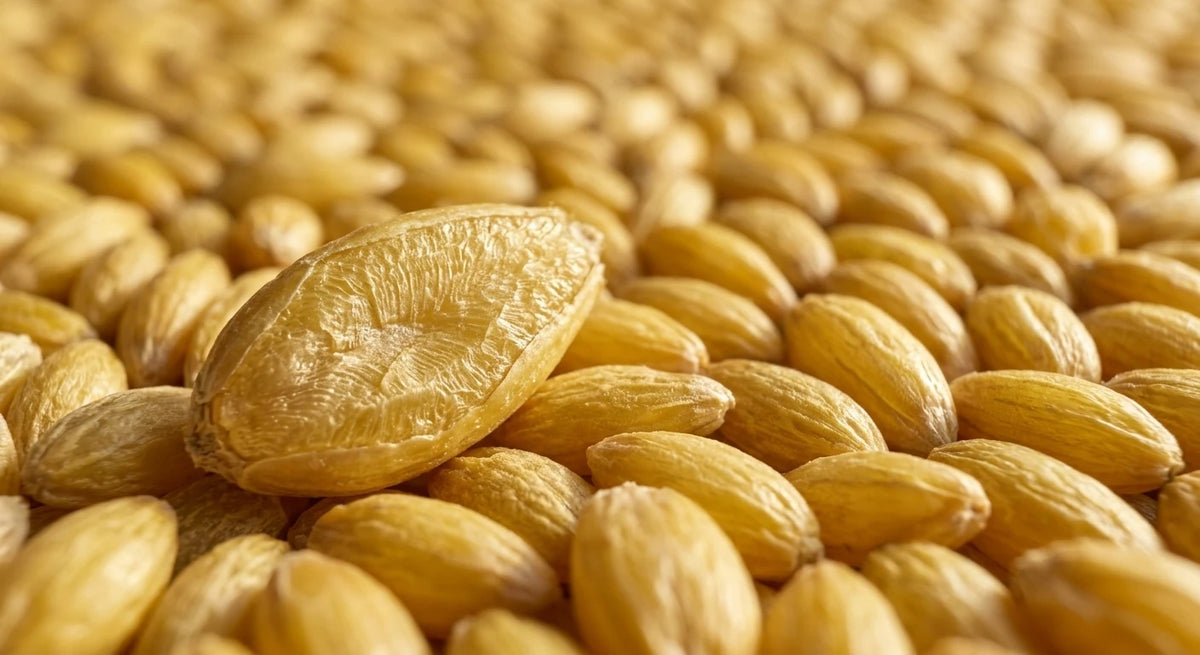
ALPISTE™ is food-grade canary seed (Phalaris canariensis L.), a cereal grain grown extensively in Canada's Prairie provinces.
The word alpiste is commonly used for dehulled canary seed intended for human food. Unlike traditional canary seed associated with bird feed, food-grade Alpiste comes from specially developed glabrous, or hairless, varieties suitable for human consumption.[2][5]
Food-grade canary seed can be enjoyed whole, milled into flour, or incorporated into foods such as baked goods, cereals, pasta and snacks.[2]
With its mild, slightly nutty flavour and versatile food applications, ALPISTE™ brings a lesser-known Canadian-grown grain into the modern kitchen.
Why Choose ALPISTE™?
- Food-grade canary seed for human consumption
- Product of Canada
- Canadian-grown food ingredient
- Independently tested
- 21.14 g protein per 100 g [1]
- 6.3 g protein per 30 g serving [1]
- Plant-based and vegan-friendly
- Dehulled glabrous (hairless) variety
- Mild, versatile flavour
- Suitable for baking, cereals, smoothies and canary seed milk
Independent nutritional analysis of ALPISTE™ Food Grade Canary Seed measured 21.14 g of protein per 100 g and 6.3 g per 30 g serving. [1]
→ View ALPISTE™ Nutrition Facts
What Is Alpiste Called in English?
Alpiste is the Spanish word for canary seed.
In the context of food, you may also see Alpiste described as:
- Food-grade canary seed
- Canary seed for human consumption
- Dehulled canary seed
- Glabrous canary seed
- Hairless canary seed
The Canary Seed Development Commission of Saskatchewan notes that dehulled canary seed for human food is referred to by its Spanish name, Alpiste. [5]
This distinction matters because ALPISTE™ is intended as human food, not as conventional birdseed.
What Is Canary Seed?
Canary seed is the grain produced by Phalaris canariensis L., a cereal crop belonging to the grass family, Poaceae, which also includes familiar cereal crops such as wheat, oats, barley and rye.[2][4]
Traditional canary-seed varieties were historically used primarily as birdseed. Canadian breeding programs later developed glabrous varieties without the small hair-like fibres, or trichomes, associated with older varieties.[4]
These hairless varieties opened the way for canary seed to be evaluated and used as a cereal grain for human consumption.[2][4]
A Canadian Agricultural Success Story
Food-grade canary seed has a particularly strong connection to Canadian agriculture.
The development of hairless canary seed involved breeding work at the University of Saskatchewan's Crop Development Centre.[4]
The Canadian Grain Commission reports that Saskatchewan accounts for more than 95% of Canadian canary-seed acreage and production and is the world's leading producer and exporter of canary seed.[4]
Health Canada completed its safety assessment of dehulled glabrous brown and yellow canary-seed varieties for use as cereal grain for human consumption.[2]
Today, food-grade canary seed can be used whole or milled into ingredients for a variety of food applications.[2]
Why We Chose Canadian-Grown Alpiste
Supporting Canadian agriculture is an important part of the ALPISTE™ story.
We believe innovative Canadian-grown foods deserve greater recognition. ALPISTE™ gives us an opportunity to introduce more people to a cereal grain with deep roots in Canadian agricultural development.
By choosing Canadian-grown Alpiste, we support:
- Canadian agriculture
- Canadian growers
- Canadian food innovation
- Greater awareness of food-grade canary seed
Our goal is simple:
Introduce more Canadians to a versatile Canadian-grown grain and the many ways it can be used as food.
Protein in ALPISTE™
Independent laboratory testing gives us an actual measurement of the protein present in the ALPISTE™ sample tested.
ALPISTE™ Food Grade Canary Seed measured:
21.14 g protein per 100 g [1]
6.3 g protein per 30 g serving [1]
Protein content is only part of the nutritional story. Research on food-grade hairless canary seed has also examined amino-acid composition and protein quality.
ALPISTE™ Nutrition at a Glance
Independent nutritional analysis of ALPISTE™ Food Grade Canary Seed found:[1]
| Nutrient | Per 100 g |
|---|---|
| Protein | 21.14 g |
| Carbohydrates | 60.4 g |
| Total Fat | 6.55 g |
| Dietary Fibre | 6.53 g |
| Calories | 372 |
These values come from independent laboratory analysis of the ALPISTE™ product tested rather than general nutritional averages.[1]
→ View ALPISTE™ Nutrition Facts
What Are the Benefits of Alpiste?
Interest in food-grade Alpiste comes from its nutritional composition, versatility and development as a Canadian-grown food ingredient.
People commonly explore ALPISTE™ for:
- Its naturally occurring protein
- Whole-grain nutrition
- Plant-based food applications
- Baking and flour
- Canary seed milk
- Its mild, slightly nutty flavour
For a deeper look at its nutritional and culinary characteristics:
Is Alpiste Gluten-Free?
Health Canada states that canary seed does not contain gluten.[3]
However, there is an important distinction between gluten and wheat allergy.
Wheat Allergy Notice
Health Canada's assessment identified a protein in canary seed similar to a protein found in wheat. Because the possibility of a reaction among people with wheat allergy could not be completely excluded, prepackaged canary seed and foods produced using canary seed require an advisory for consumers with wheat allergy.[3]
May not be suitable for consumers with a wheat allergy.
Health Canada also states that a wheat-free claim would be inappropriate for canary seed or foods containing canary seed.[3]
What Does Alpiste Taste Like?
ALPISTE™ has a mild, slightly nutty flavour that makes it easy to incorporate into different foods.
Its subtle flavour works well in applications such as:
- Baking
- Breakfast cereals
- Smoothies
- Plant-based beverages
- Breads
- Snacks
- Everyday recipes
How Is Alpiste Used?
Food-grade canary seed is surprisingly versatile.
Health Canada's assessment describes dehulled glabrous canary seed being used as whole groats, whole meal, whole-grain flour and milled ingredients in foods such as bakery products, cereals, pasta, snacks and nutritional bars.[2]
At home, ALPISTE™ can be explored in several ways.
Baking
- Breads
- Muffins
- Cookies
- Pancakes
- Other baked goods
Beverages
- Canary seed milk
- Smoothies
Breakfast & Everyday Foods
- Cereals
- Granola
- Grain-based recipes
- Snacks
→ Try our Homemade Canary Seed Milk Recipe
ALPISTE™ Seeds vs. ALPISTE™ Flour
Whole ALPISTE™ Seeds
Whole food-grade canary seeds can be used for:
- Soaking and blending
- Canary seed milk
- Cooking
- Baking
- Fresh milling into flour
ALPISTE™ Flour
ALPISTE™ Flour is freshly milled from food-grade hairless canary seed and provides a convenient way to bring the grain into:
- Breads
- Baked goods
- Cereals
- Smoothies
- Everyday recipes
The Canadian Grain Commission notes that dehulled canary-seed groats can be milled into flour.[4]
Where Is Alpiste Grown?
Canadian canary-seed production is concentrated overwhelmingly in Saskatchewan.
The Canadian Grain Commission reports that Saskatchewan accounts for more than 95% of Canada's canary-seed acreage and production. [4]
ALPISTE™ is sourced from Canadian-grown food-grade canary seed.
Where Can I Buy Alpiste in Canada?
ALPISTE™ food-grade canary seed and freshly milled ALPISTE™ Flour are being prepared for market.
Visit AlpisteSeeds.ca for current product availability, educational information, recipes and preparation guides.
Learn More About ALPISTE™
→ Recipes & Preparation Guides
Frequently Asked Questions
What is Alpiste?
Alpiste is the Spanish name used for canary seed. For human food, Alpiste refers to dehulled food-grade canary seed.[5]
What is Alpiste called in English?
Alpiste is called canary seed in English. For human food, you may also see it described as food-grade canary seed or canary seed for human consumption.
Is Alpiste the same as canary seed?
Yes. Alpiste is the Spanish name for canary seed.
Is Alpiste approved for human consumption?
Health Canada completed a safety assessment of dehulled glabrous brown and yellow canary-seed varieties and had no objection to their sale as cereal grain for human consumption.[2]
Is Alpiste a grain?
Yes. Canary seed (Phalaris canariensis L.) is a cereal crop belonging to the Poaceae family.[2][4]
Is food-grade Alpiste the same as birdseed?
No. Food-grade Alpiste uses dehulled glabrous varieties suitable for human food. Traditional hairy canary-seed varieties were historically used primarily as birdseed.[4][5]
Is Alpiste gluten-free?
Health Canada states that canary seed does not contain gluten. However, canary seed may not be suitable for consumers with a wheat allergy.[3]
How much protein is in ALPISTE™?
Independent laboratory analysis of the ALPISTE™ Food Grade Canary Seed tested measured 21.14 g protein per 100 g and 6.3 g per 30 g serving. [1]
What does Alpiste taste like?
ALPISTE™ has a mild, slightly nutty flavour that works well in a range of food applications.
Where is Alpiste grown?
Canadian commercial production is concentrated primarily in Saskatchewan, which accounts for more than 95% of Canadian canary-seed acreage and production.[4]
Where can I buy Alpiste?
Visit AlpisteSeeds.ca for ALPISTE™ product availability, educational information, recipes and preparation guides.
References & Laboratory Testing
[1] ALPISTE™ Independent Laboratory Analysis.
Mérieux NutriSciences / Silliker Canada Co. ALPISTE Food Grade Canary Seeds, LOT#1416, Laboratory ID 453970412. Protein analyzed using AOAC 992.15. Analytical result: 21.14 g protein per 100 g and 6.3 g per 30 g serving.
[2] Health Canada.
Novel Food Information: Glabrous Canary Seed (Phalaris canariensis L.). Assessment of dehulled glabrous brown and yellow canary seed as cereal grain for human consumption and its intended food applications. [canada.ca]
[3] Health Canada.
Information for Wheat-Allergic Individuals: Canary Seed. Information on gluten and the wheat-allergy advisory associated with canary seed. [canada.ca]
[4] Canadian Grain Commission.
Canary Seed: A Novel Cereal from the Canadian Prairies. Information on Canadian development, production, glabrous varieties and food uses of canary seed. [grainscanada.gc.ca]
[5] Canary Seed Development Commission of Saskatchewan.
About Canary Seed. Information on glabrous canary-seed varieties, Canadian production and use of the name Alpiste for dehulled canary seed intended for human food. [canaryseed.ca]
Updated: October 2026